The 28-day break is due today. The system already knew.
Construction material testing lives and dies by dates — casting date, curing age, break date. ErgoLIMS holds the schedule, evaluates against the IS grade the moment strength is entered, and issues a certificate the client cannot dispute.
Hex nuts turning — drawn live in the browser, no two frames alike
A missed break date is a lost sample, and there is no second chance
Cubes cast on the 3rd need breaking on the 31st. The register says so, if someone reads the register. Meanwhile grade is checked against a printed table, strength results are re-typed into a Word certificate, and the client calls asking whether the M25 passed — which nobody can answer without walking to the machine.
Six things a building materials lab gets that a spreadsheet cannot give it
Each of these is a shipped capability, not a roadmap item.
Grade is evaluated, not eyeballed
OPC 43 and 53 compressive strength, Fe500 yield and tensile, M25 cube strength and setting-time limits arrive pre-loaded from IS 4031, IS 1786 and IS 516. A result below grade fails on entry and opens an out-of-specification investigation.
Break dates the system tracks for you
Turnaround is computed in working days, skipping Sundays and the recurring holidays you configure. The priority queue and TAT-risk list show what is due and what is about to slip, per department.
Strength is computed, not calculated by hand
Analysts enter load and cross-sectional area; the server evaluates the formula, applies your significant figures and rounding mode, and writes an execution log that can never be edited or deleted.
An uncalibrated CTM cannot report
The compression testing machine, UTM, Vicat and sieve set sit in the register with calibration schedules. The day a calibration lapses the instrument locks out and result entry refuses anything claiming it.
The sample knows which structure it came from
Batch/lot number, BIS licence number, grade, sampling location or structure and the IS reference are structured registration fields — searchable and printable, not free text.
A certificate the client can verify themselves
Reports carry a NABL ULR allocated atomically — no gaps, no duplicates — and a QR code anyone can scan without a login. A revoked report returns a hard error rather than continuing to look valid.
How a building materials sample moves through the system
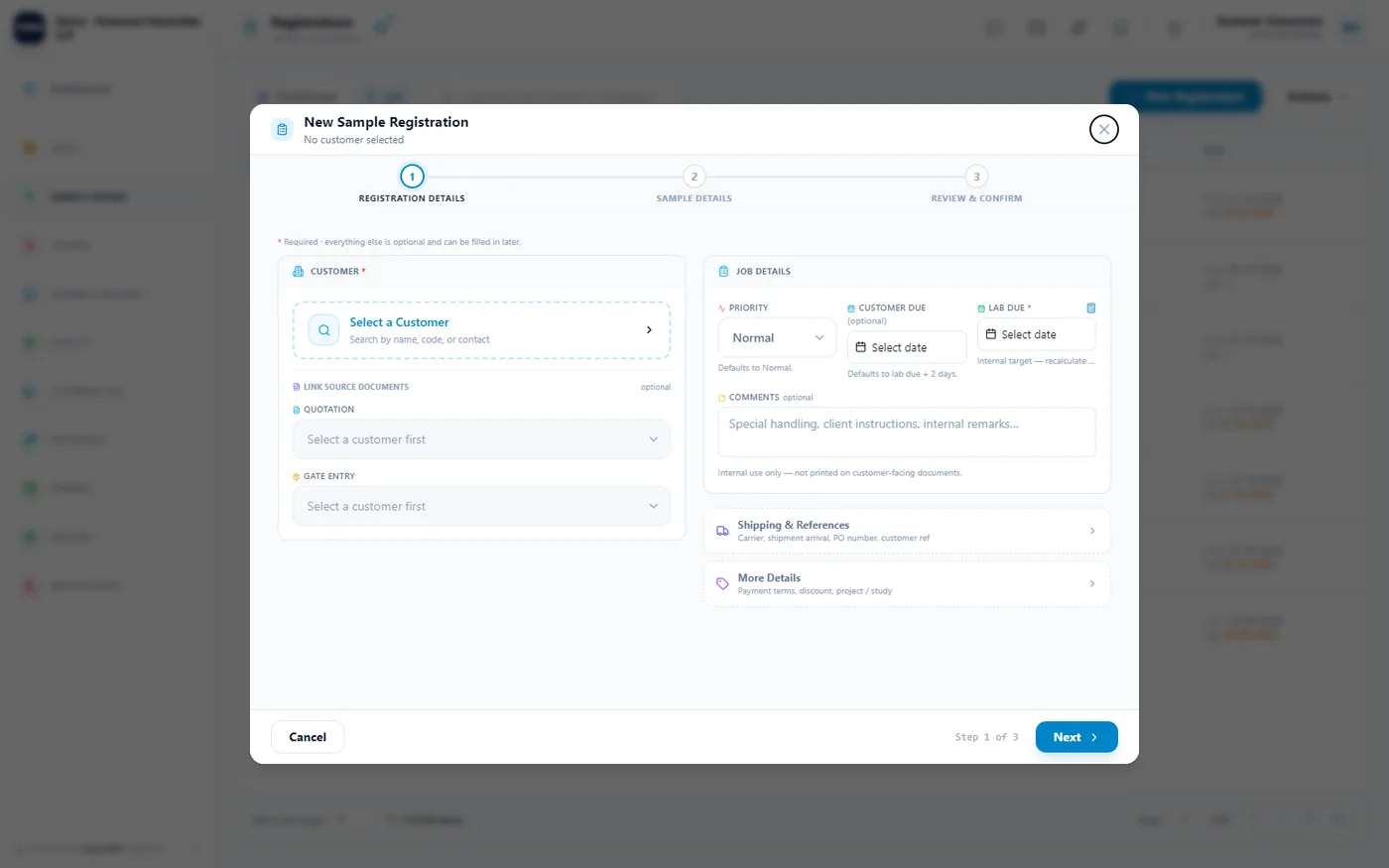
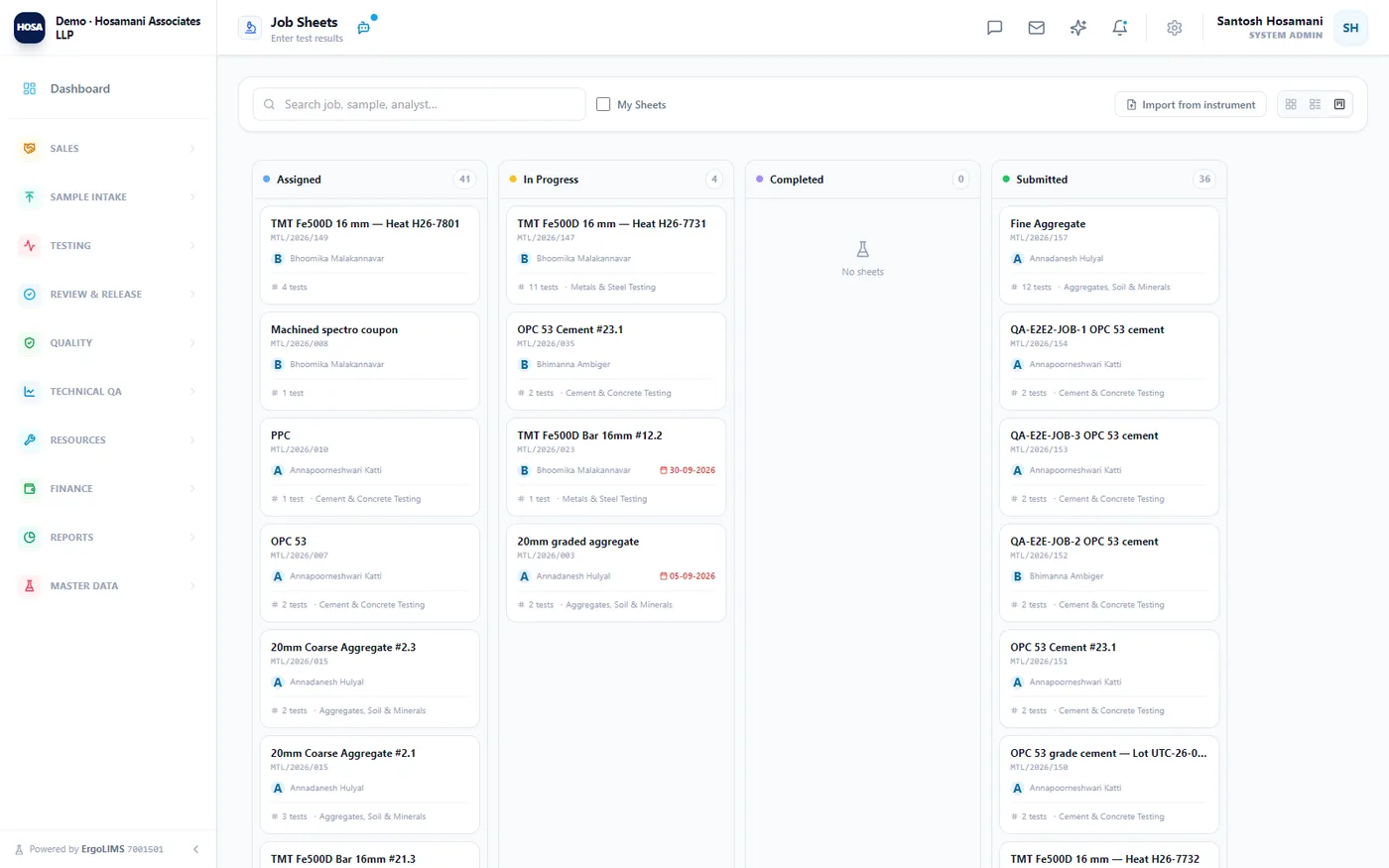
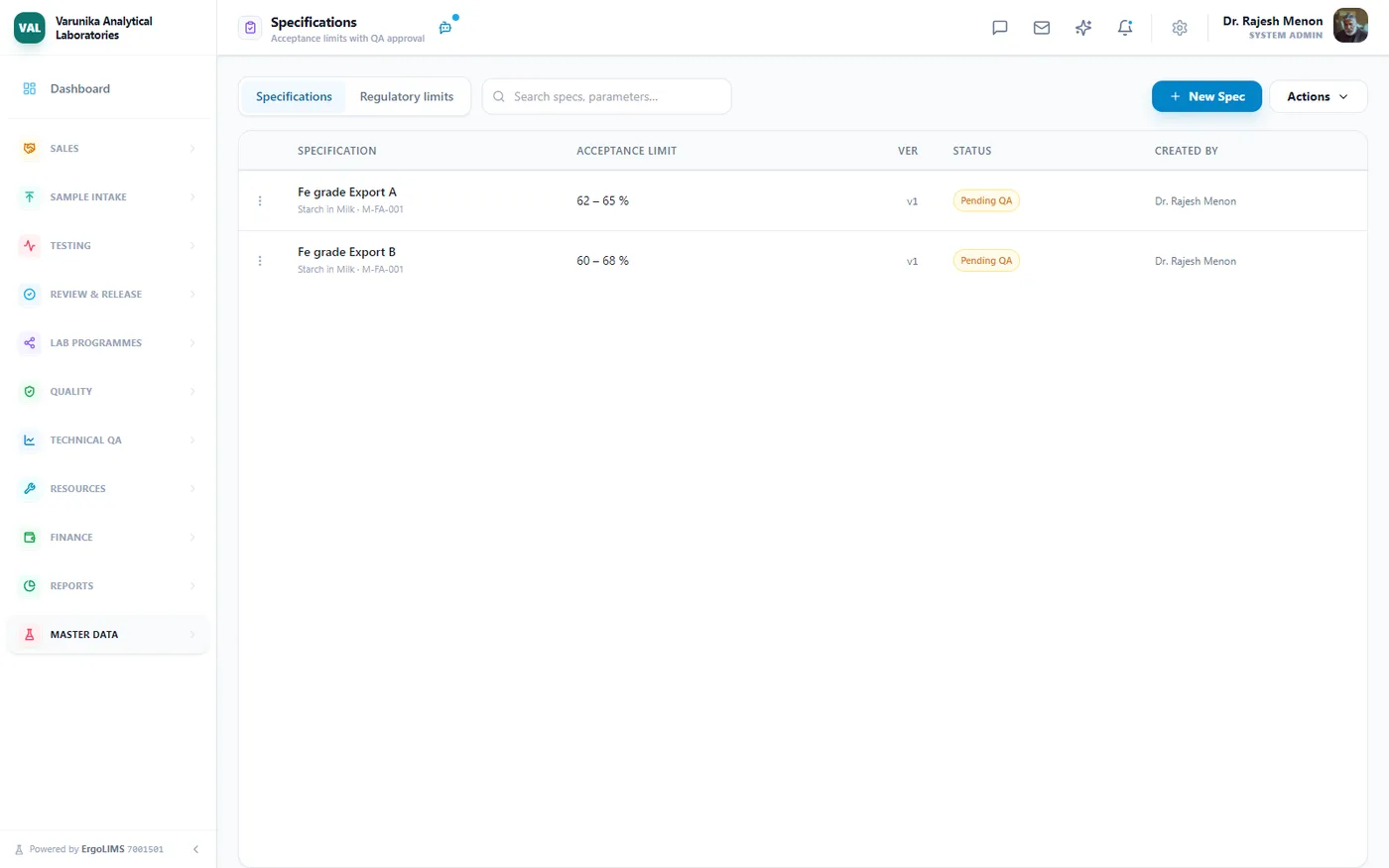
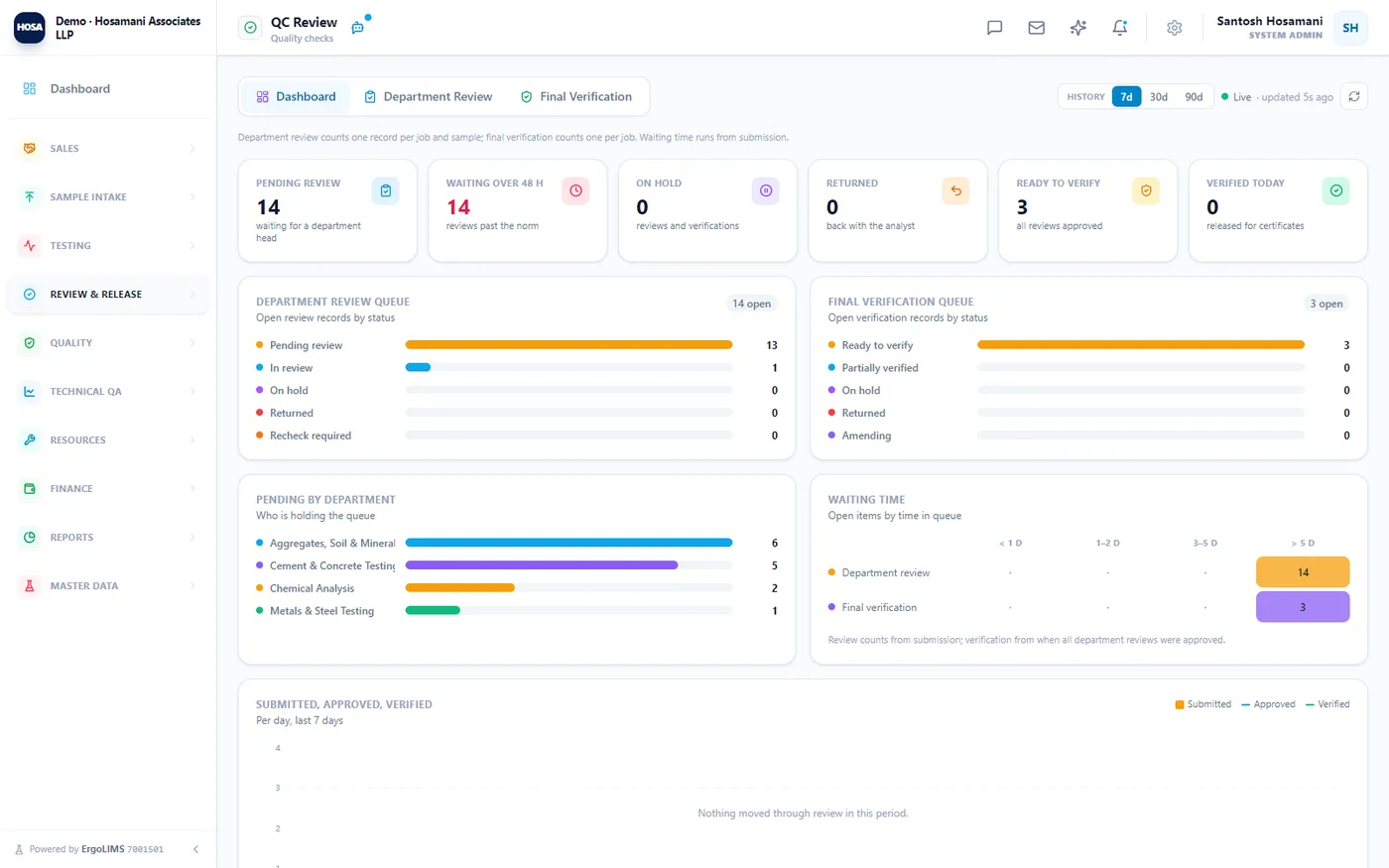
The registration form — three steps, with the customer-committed date and the internal lab target kept as separate fields.
Three people in the lab, three different wins
The day board tells you which cubes break today. You enter load, not strength — the calculation and the grade check are the system's job.
Every under-strength result raises an investigation with defined closure criteria, so a failure is documented rather than discussed.
Scan the QR on the certificate and confirm it is genuine, without calling the lab.
Compliance a building materials assessor will recognise
IS 4031 · IS 1786 · IS 516 · IS 2386
Cement, steel, concrete and aggregate methods with their part references, and nine grade limits pre-loaded for OPC 43/53, Fe500 and M25.
NABL · ISO/IEC 17025:2017
ULR numbering, authorised signatories, method validation studies, proficiency testing and a complete quality management system in the same product.
Measurement uncertainty
Expanded uncertainty to the GUM, with type A and type B components and a stated coverage factor, reportable on the certificate.
And you do not start from an empty system
Choose the building materials domain at setup and ErgoLIMS provisions the scaffolding for you — as editable templates, not a locked configuration. Grade limits shown arrive pre-loaded. They are editable, versioned and can be overridden per customer or per product.
Questions we hear from building materials labs
See it run on your own parameters
A 30-minute walkthrough with the engineers who built it — using your methods, your limits and your reporting format, not a canned script.