The buyer's protocol is not the same as the standard.
Export textile testing means every account has its own acceptance criteria. ErgoLIMS holds a specification per customer, evaluates against the one that applies, and issues the report in that buyer's own format.
Spools of thread — drawn live in the browser, no two frames alike
Ten buyers, ten protocols, one spreadsheet
One buyer accepts grade 4 for wash fastness, another insists on 4-5. Formaldehyde limits differ by market. Azo dye screening is mandatory for the EU and optional elsewhere. Keeping that straight in a spreadsheet works until the person who maintains it is on leave.
Six things a textile lab gets that a spreadsheet cannot give it
Each of these is a shipped capability, not a roadmap item.
A specification per buyer, versioned
Beyond the IS or ISO method, specifications support per-customer and per-product overrides with versioning and an approval step. The same fabric is judged against the protocol that account actually signed.
Their format, your template control
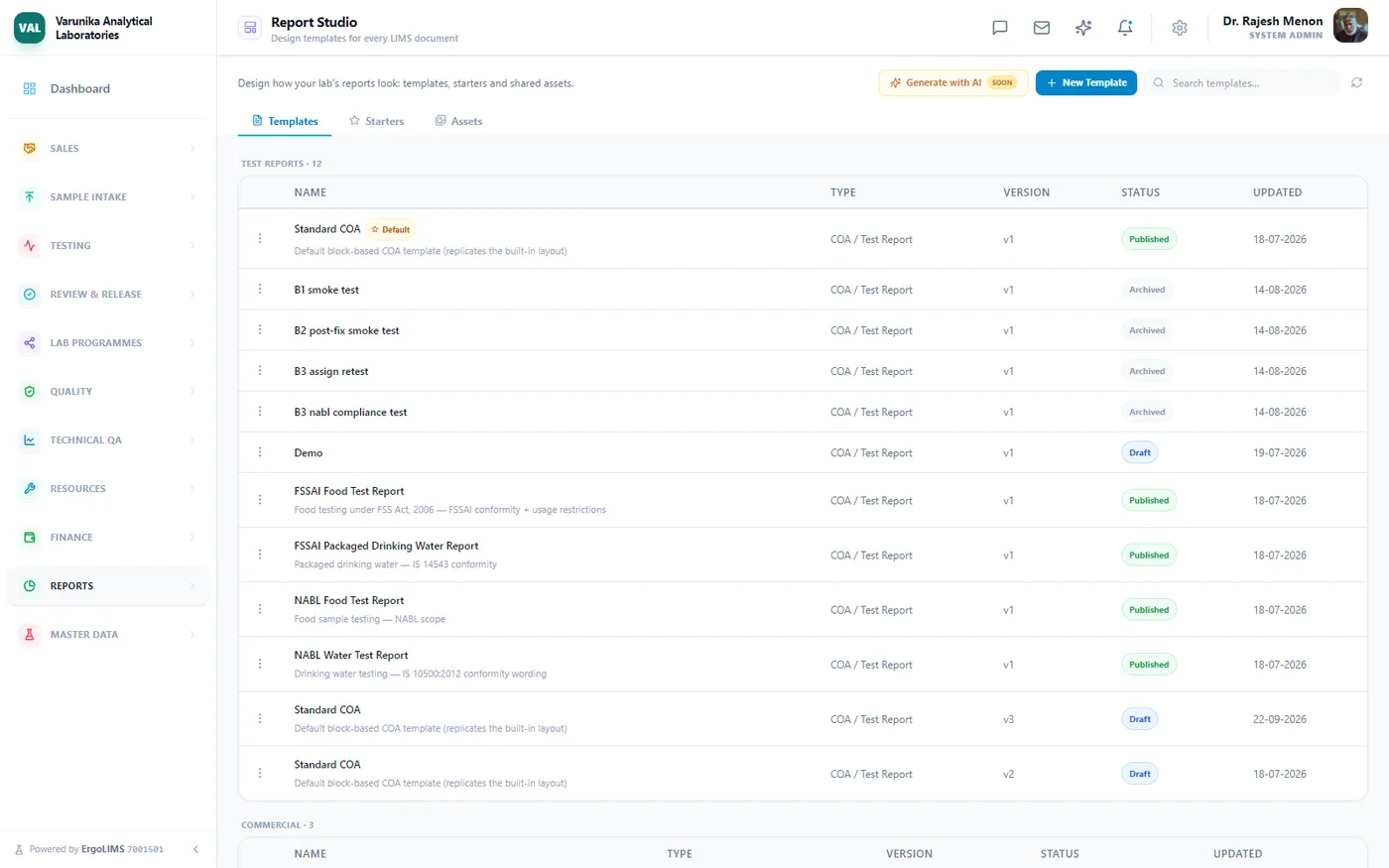
Report Studio holds versioned templates across eight document types, assigned per customer and gated by approval. A buyer's format is configured once and issues consistently.
Restricted substances flagged on entry
Formaldehyde and azo dye methods are seeded with their OEKO-TEX and EN 14362 references. A result outside the limit you hold for that market fails on entry and opens an investigation.
Conditioned equipment, enforced
Tensile testers, crockmeters, Launder-O-Meters, xenon arc light fastness testers and pilling testers sit in the register with calibration schedules and booking the database prevents double-allocating.
Grading by a cleared assessor
Colour fastness grading is judgement work. Per-method authorisations with competency level and expiry decide who may report a grade, and the check runs server-side at result entry.
The buyer sees status without emailing you
The customer portal gives each account job status, report download, invoices and the ability to raise new sample requests — under authentication separate from your lab users.
How a textile sample moves through the system
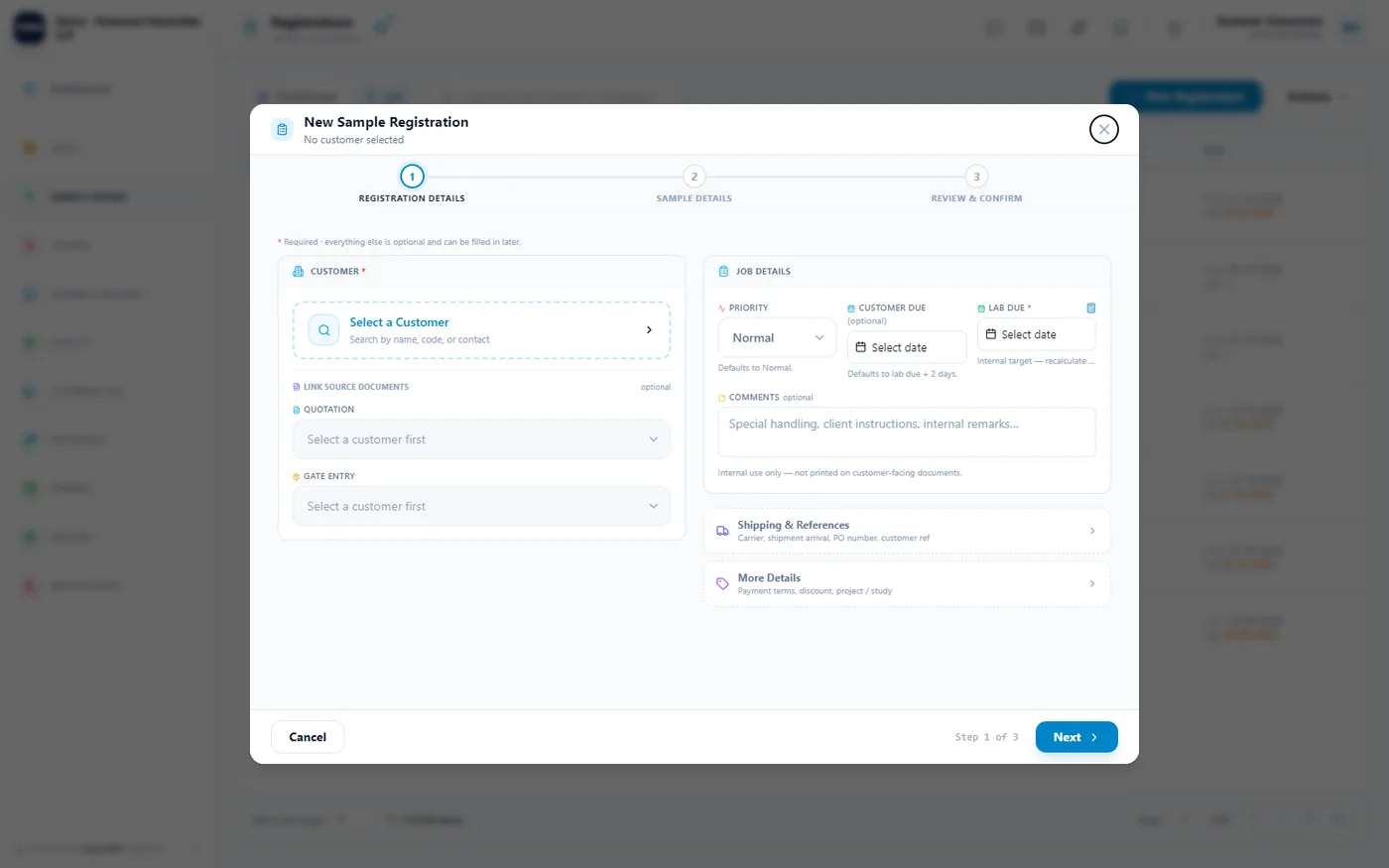
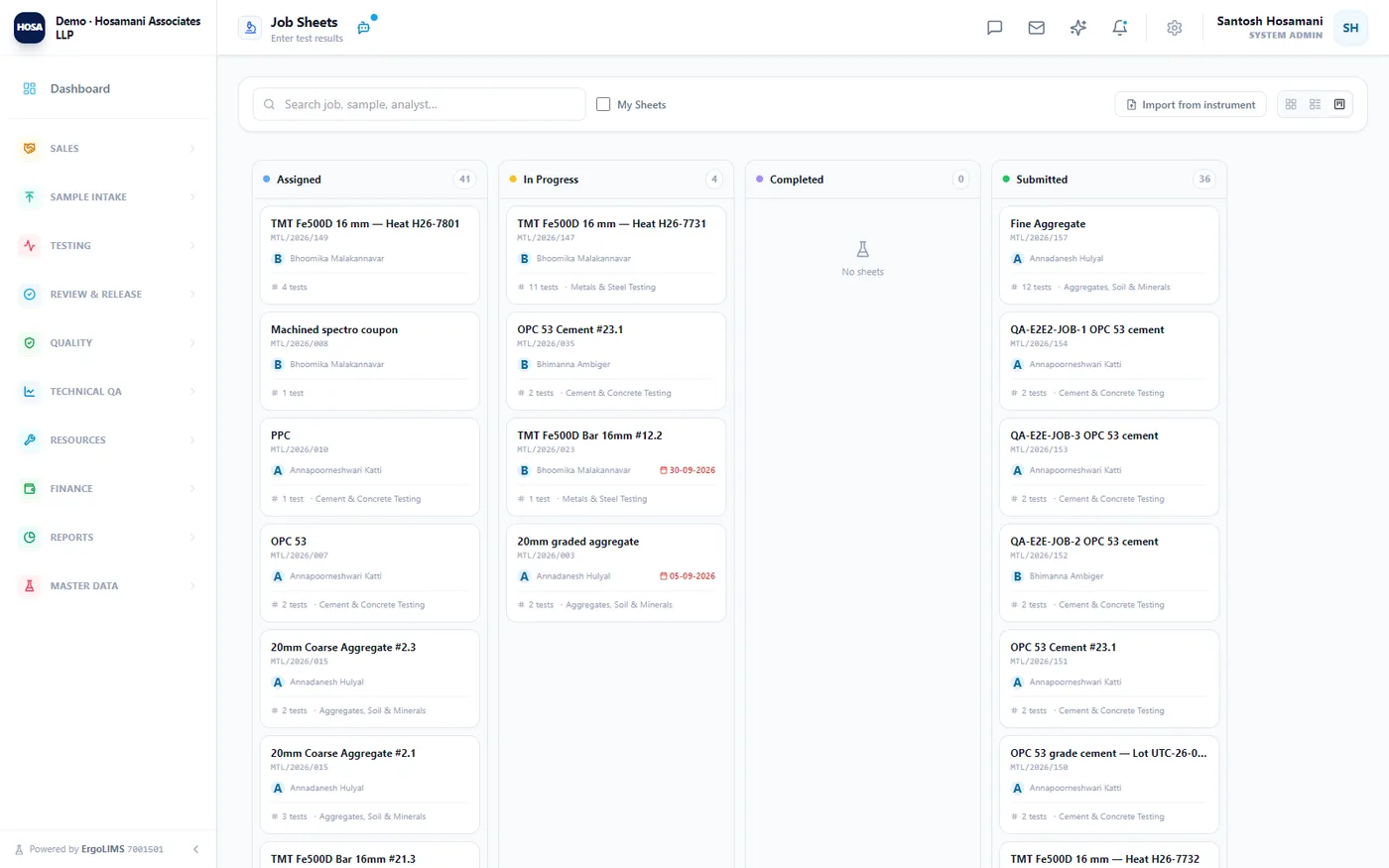
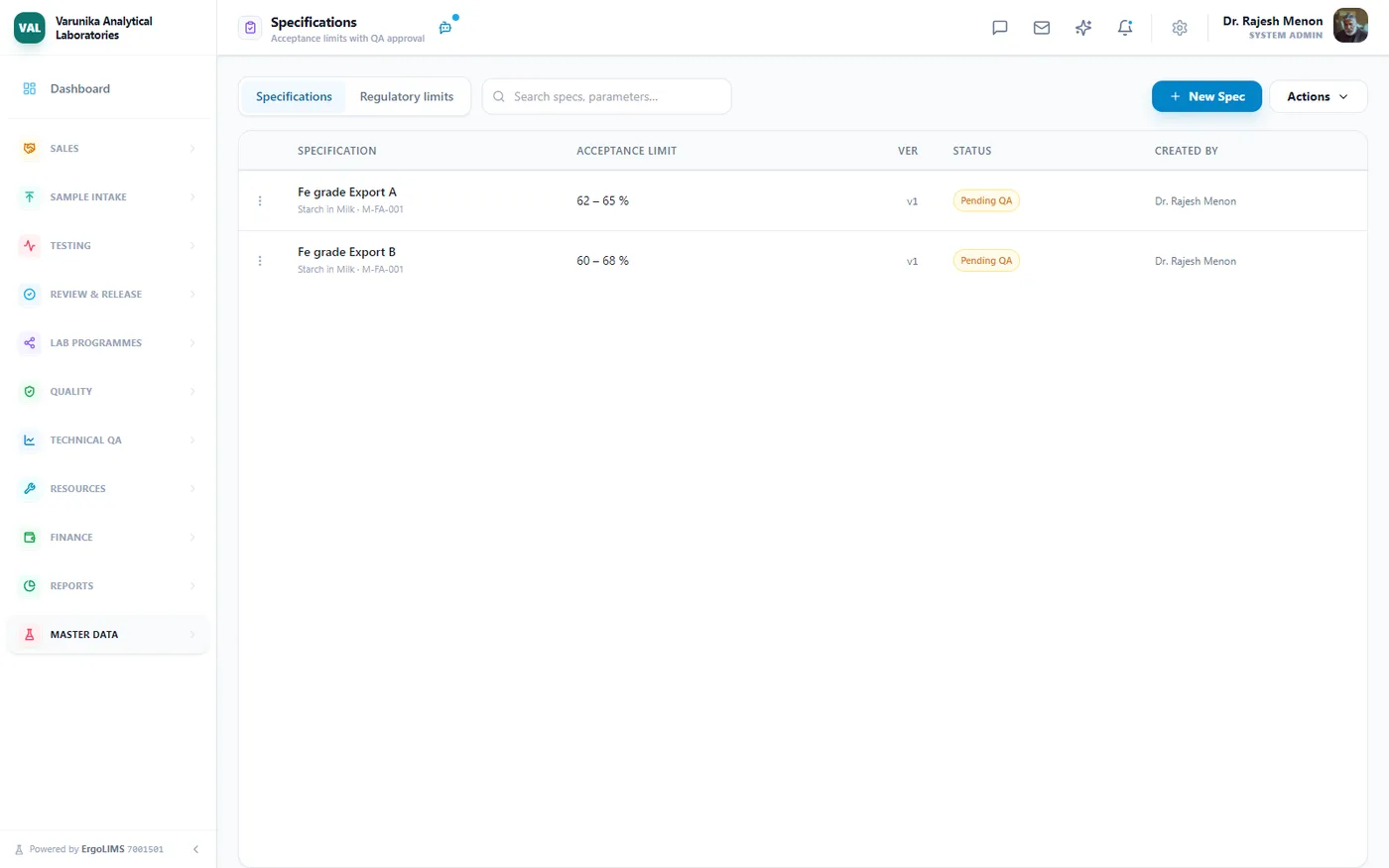
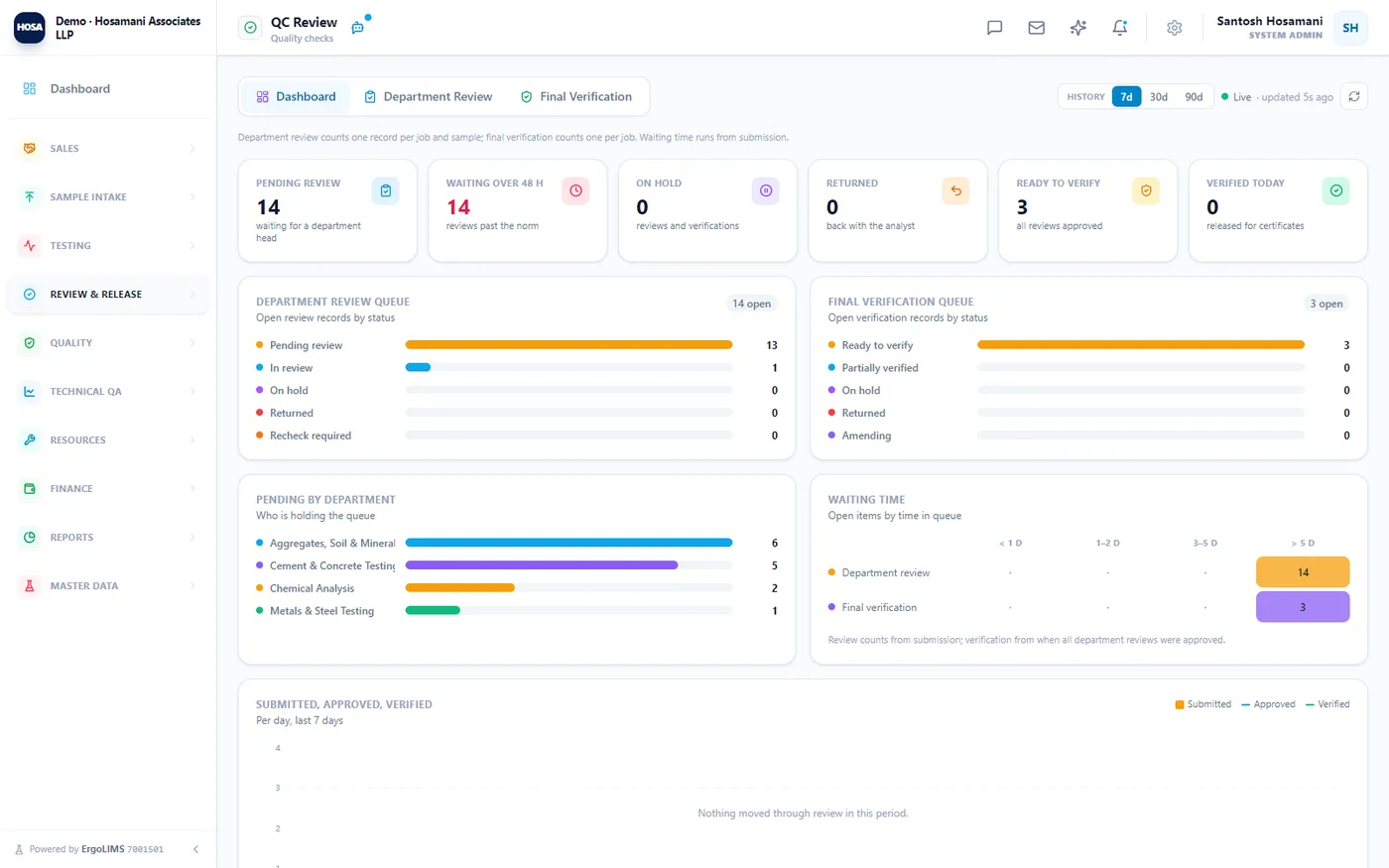
The registration form — three steps, with the customer-committed date and the internal lab target kept as separate fields.
Three people in the lab, three different wins
The acceptance criteria that apply to this lot are on the screen, so you are not checking which buyer wanted grade 4-5.
Buyer protocols are versioned and approved records rather than a spreadsheet, and a breach raises a documented investigation.
The buyer pulls reports from the portal themselves, and can verify any certificate by QR.
Compliance a textile assessor will recognise
ISO 105 · IS 764 · IS 971
Colour fastness to washing, rubbing and light with their published references, alongside physical and dimensional stability methods.
OEKO-TEX · EN 14362 · ISO 14362-1
Free formaldehyde and carcinogenic azo dye screening seeded as restricted-substance methods.
NABL · ISO/IEC 17025:2017
ULR numbering, authorised signatories, method validation, proficiency testing and a full quality management system.
And you do not start from an empty system
Choose the textile domain at setup and ErgoLIMS provisions the scaffolding for you — as editable templates, not a locked configuration. No acceptance limits ship pre-loaded for textile — buyer protocols vary by market. Define them as per-customer specifications with versioning and approval.
Questions we hear from textile labs
See it run on your own parameters
A 30-minute walkthrough with the engineers who built it — using your methods, your limits and your reporting format, not a canned script.