A critical value should reach a clinician, not a queue.
Diagnostic laboratories carry a different kind of risk. ErgoLIMS holds the reference intervals, blocks a run on a Westgard violation, and keeps the specimen, the analyst and the release signature bound to every report.
Hearts drifting — drawn live in the browser, no two frames alike
The problem is rarely the assay. It is everything around it
A control drifts and the run continues anyway. A haemoglobin sits outside the reference interval and nobody flags it until reporting. A STAT specimen queues behind routine work. And patient data — the most sensitive data your lab holds — sits in spreadsheets with no access trail.
Six things a clinical lab gets that a spreadsheet cannot give it
Each of these is a shipped capability, not a roadmap item.
A Westgard violation stops the run
1-3s, 2-2s, R-4s, 4-1s and 10x run on Levey-Jennings charts with rolling control limits. A violation raises a QC run block and result entry is refused with QC_RUN_BLOCKED — it does not merely warn.
Reference intervals evaluated on entry
Haemoglobin, WBC, platelets, PCV, glucose, HbA1c, creatinine and bilirubin arrive with sex-specific intervals pre-loaded. Anything outside range flags as the value is entered.
Only an authorised analyst reports
Per-method authorisations carry competency level and expiry; an analyst not cleared for a method cannot save a result for it. Analyst conflict restrictions can also bar a named analyst from a named account for impartiality.
Patient data with a privacy trail
Access to patient data is governed by roles plus per-user permission overrides, every action lands on an append-only audit log, and legal holds and versioned retention policies decide how long a record is kept. A dedicated console for DPDP/GDPR subject requests, consent records and a pseudonymisation log is on the roadmap.
STAT work that actually jumps the queue
A STAT flag is a structured registration field. The priority queue, analyst capacity board and TAT-risk list surface urgent work against real assigned load, per department.
Release is signed, not just clicked
Department review then final verification, each with an electronic signature carrying an identity challenge and a captured reason. Post-release corrections are amendments with reason codes and a re-issued report — never a silent edit.
How a clinical sample moves through the system
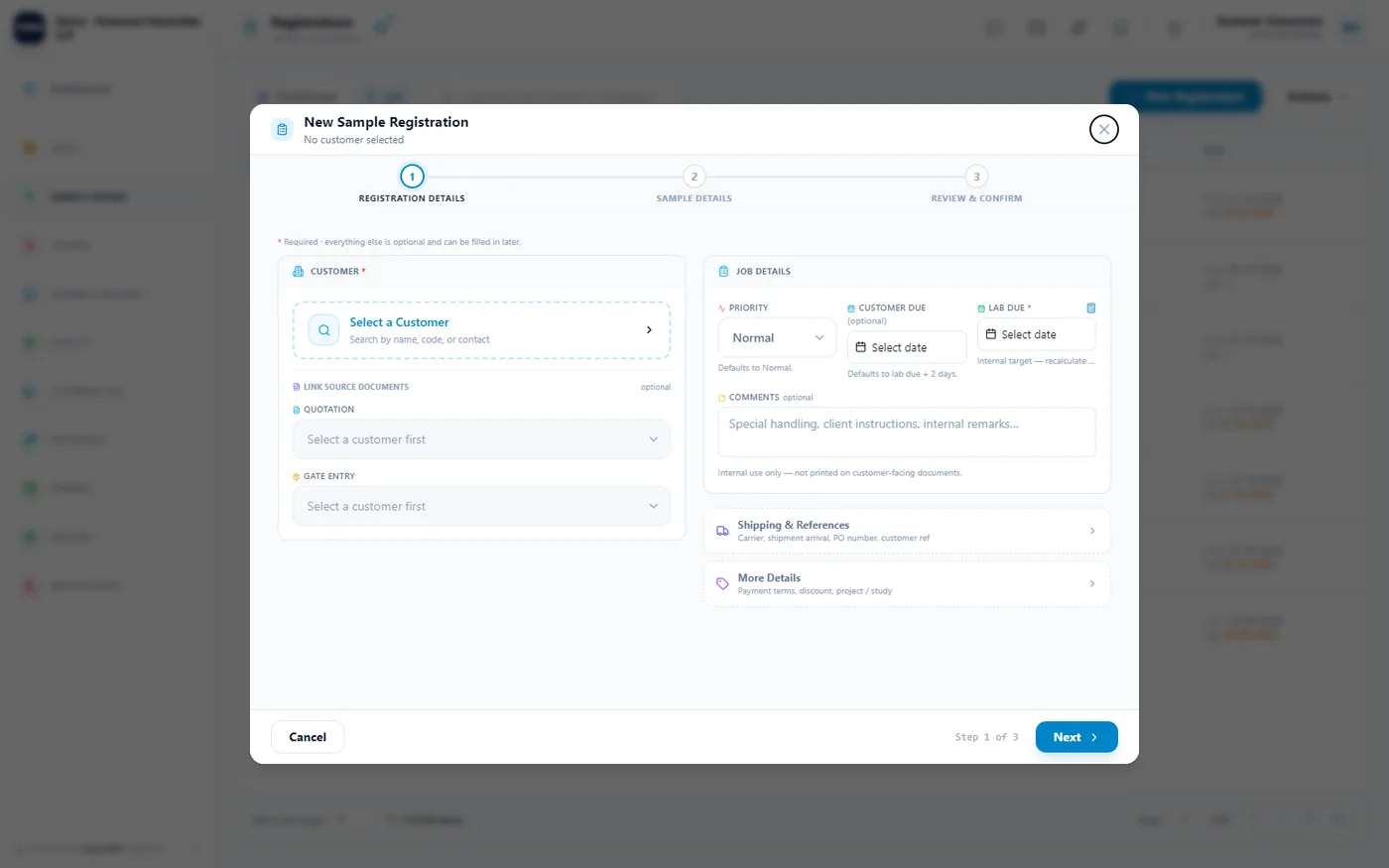
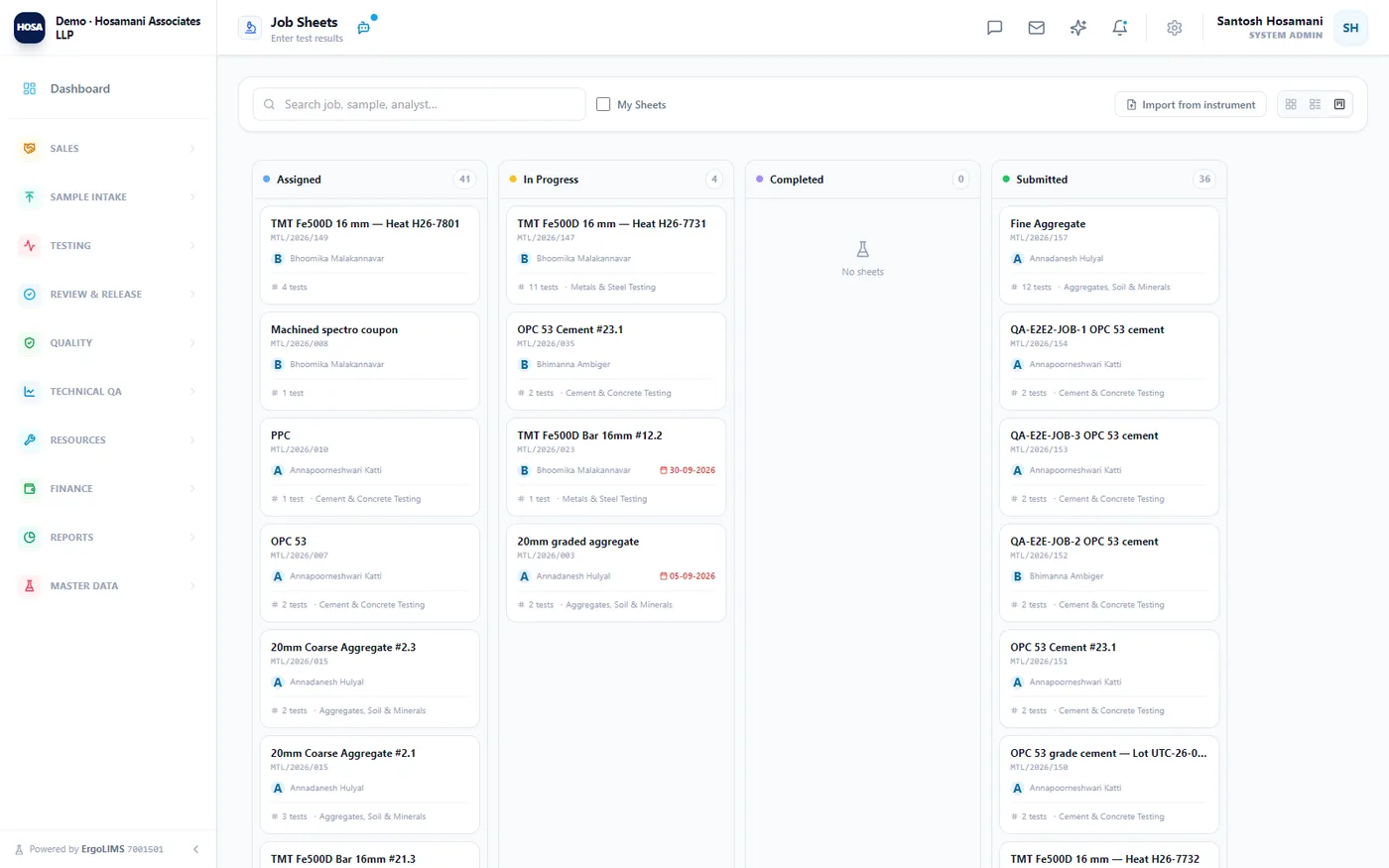
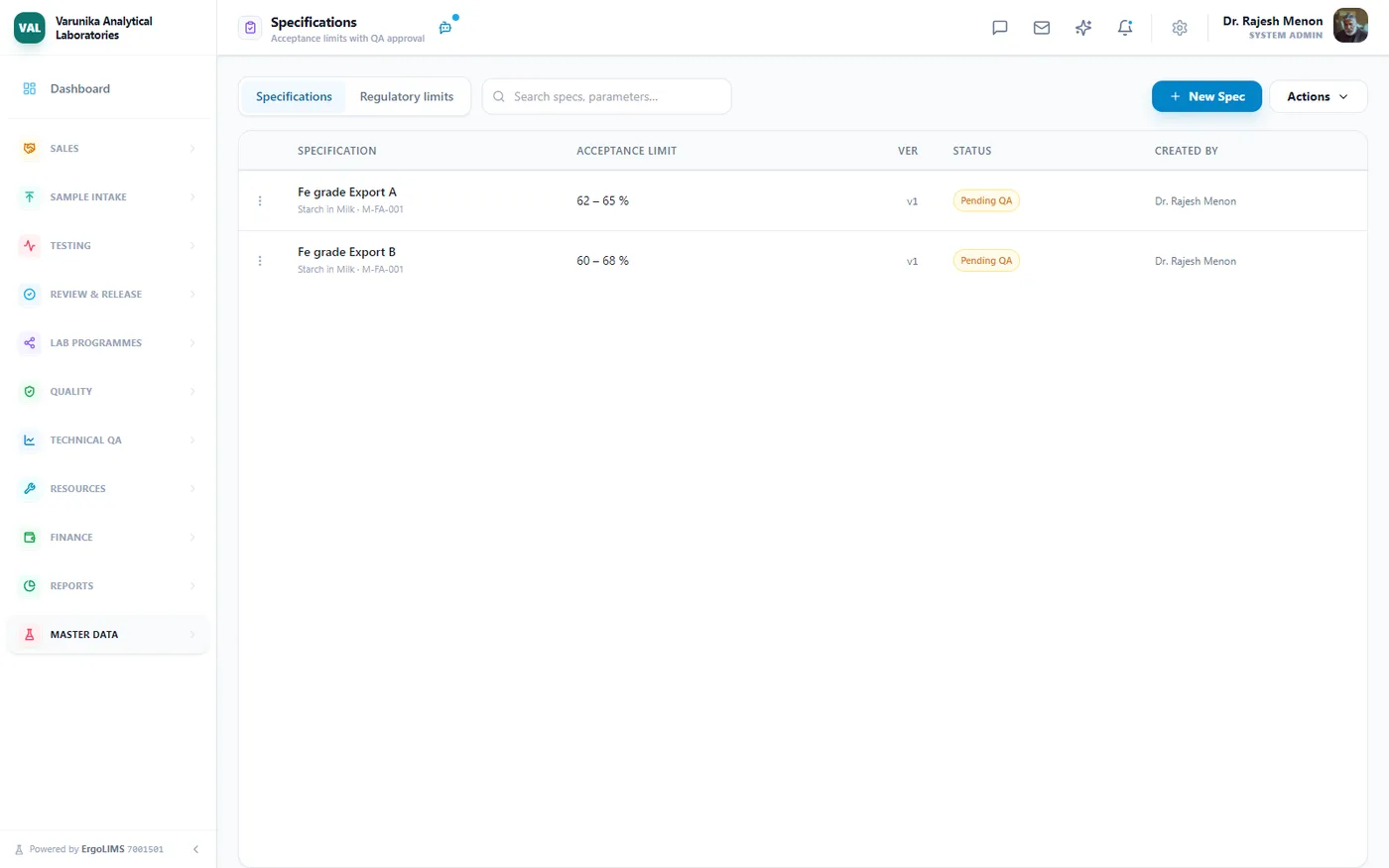
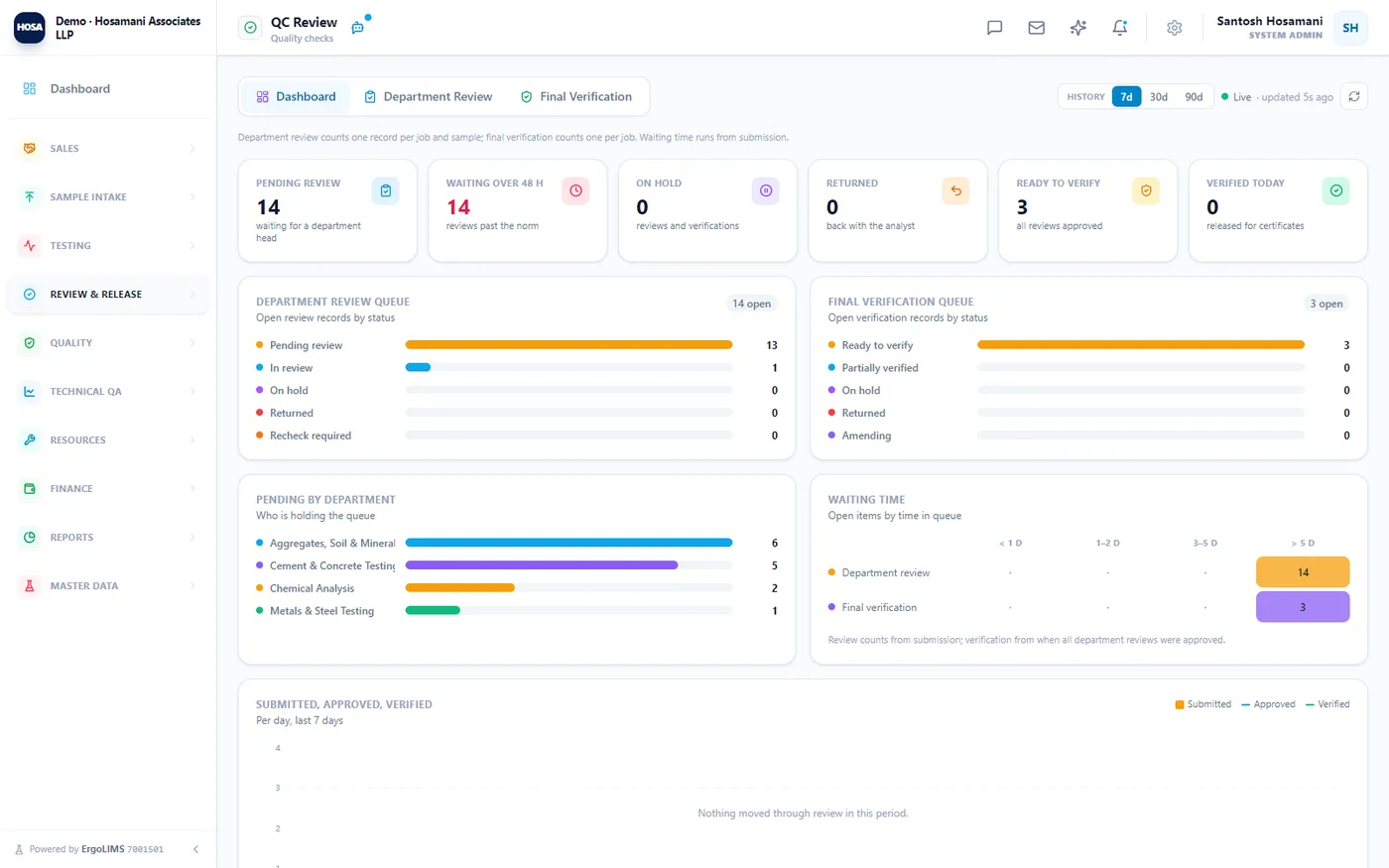
The registration form — three steps, with the customer-committed date and the internal lab target kept as separate fields.
Three people in the lab, three different wins
The system refuses to let an out-of-control run be reported, so a QC failure costs a re-run rather than a recall.
Every release carries your signature with a reason, and a correction is an amendment on the record rather than an overwrite.
Patient data access is governed by permissions and logged append-only, which is what a DPDP enquiry actually asks for.
Compliance a clinical assessor will recognise
ISO 15189 · NABL medical
Competency records, QC, method validation, internal audits, management review and complaints handling in one system, with an accreditation pack for medical scope.
CLSI H20 · M100 · EP9
Haematology, culture and sensitivity and method-comparison references seeded on the relevant methods.
DPDP Act · GDPR
Legal holds and versioned retention policies with approval and dry-run ship today; the subject-request console (requests, consent records, pseudonymisation log) is coming soon.
And you do not start from an empty system
Choose the clinical domain at setup and ErgoLIMS provisions the scaffolding for you — as editable templates, not a locked configuration. Reference intervals shown arrive pre-loaded. They are editable, versioned and can be overridden per customer or per product.
Questions we hear from clinical labs
See it run on your own parameters
A 30-minute walkthrough with the engineers who built it — using your methods, your limits and your reporting format, not a canned script.