Catch the adulterant. Prove you caught it.
Milk adulteration screening, batch traceability and FSSAI-shaped reporting in one system — built so a positive urea or starch result cannot quietly become a passing certificate.
Orchard drift — drawn live in the browser, no two frames alike
Food labs fail on handoffs, not on chemistry
Chemistry finishes, microbiology is still running, and the certificate goes out anyway. A batch number is written on a form but never reaches the report. An adulteration screen comes back Present and someone has to remember what that means for release.
Six things a food lab gets that a spreadsheet cannot give it
Each of these is a shipped capability, not a roadmap item.
Adulteration screens that enforce themselves
Urea, starch, detergent, neutralizers and hydrogen peroxide are seeded as absent/present parameters against FSSAI Manual 2011. A 'Present' result fails its specification the instant it is entered and routes into an out-of-specification investigation.
Every result traceable to its batch
Batch/lot number, manufacturer, brand, manufacturing and expiry dates are captured at registration — first-class fields that print on the COA and stay searchable for the life of the record.
One sample, several departments, one certificate
Tests on a single sample run in parallel across Food Chemistry, Microbiology, Packaging and Sensory. The certificate holds until every department's results have passed review — the system enforces the wait.
Composition maths, done once and correctly
SNF, fat by difference and similar derived values are computed server-side from analyst-entered variables, with significant figures, rounding mode and expanded uncertainty applied — and an execution log kept for every calculation.
FSSAI-shaped certificates, versioned
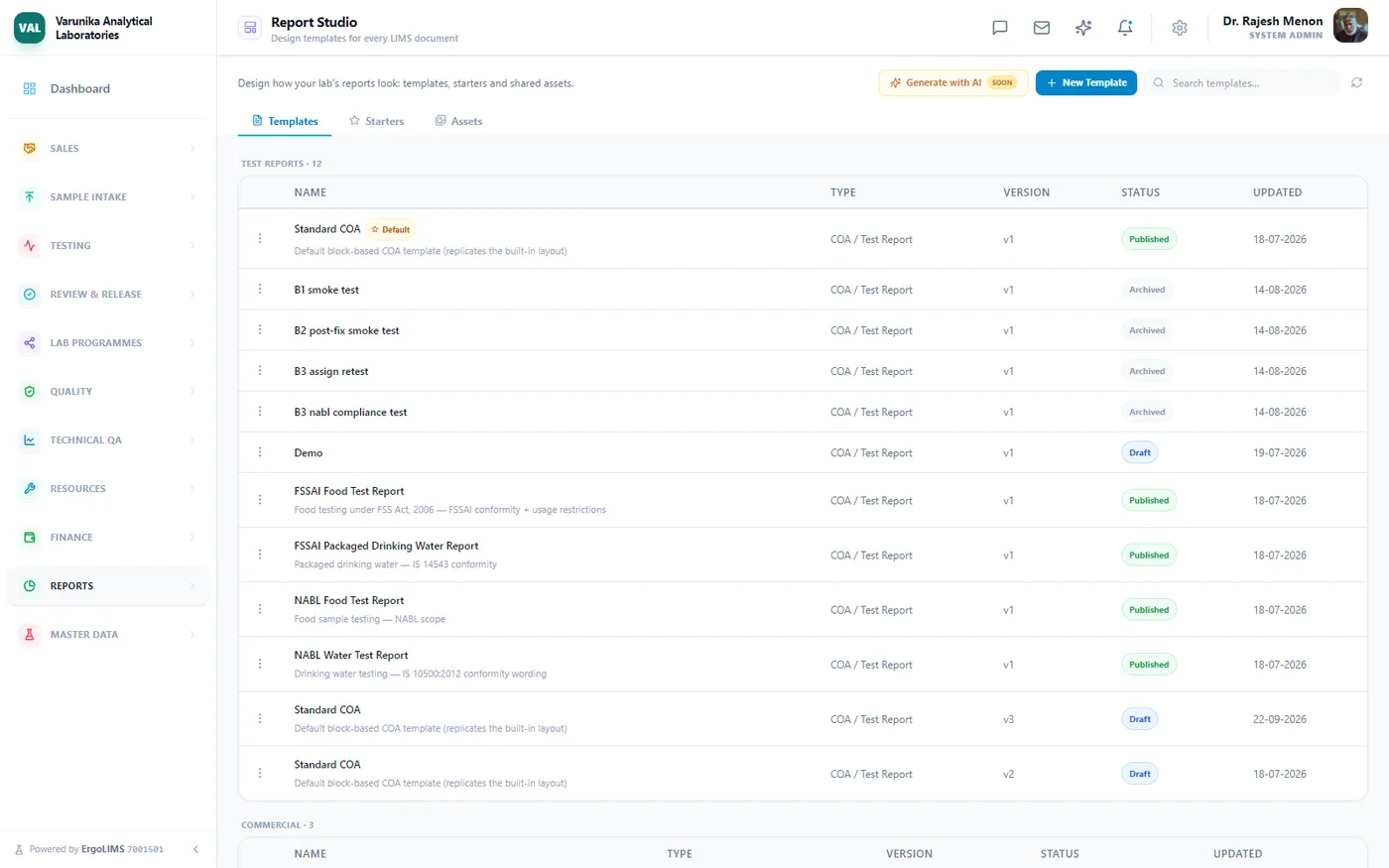
Report Studio ships FSSAI-aligned COA templates with conformity wording and usage restrictions. Templates are versioned and approved, so a format change is reviewed and traceable rather than quietly overwritten.
Results reach the customer the moment they are signed
On final verification the COA dispatches by email or WhatsApp automatically, with a QR code the recipient can scan to confirm the certificate is genuine.
How a food sample moves through the system
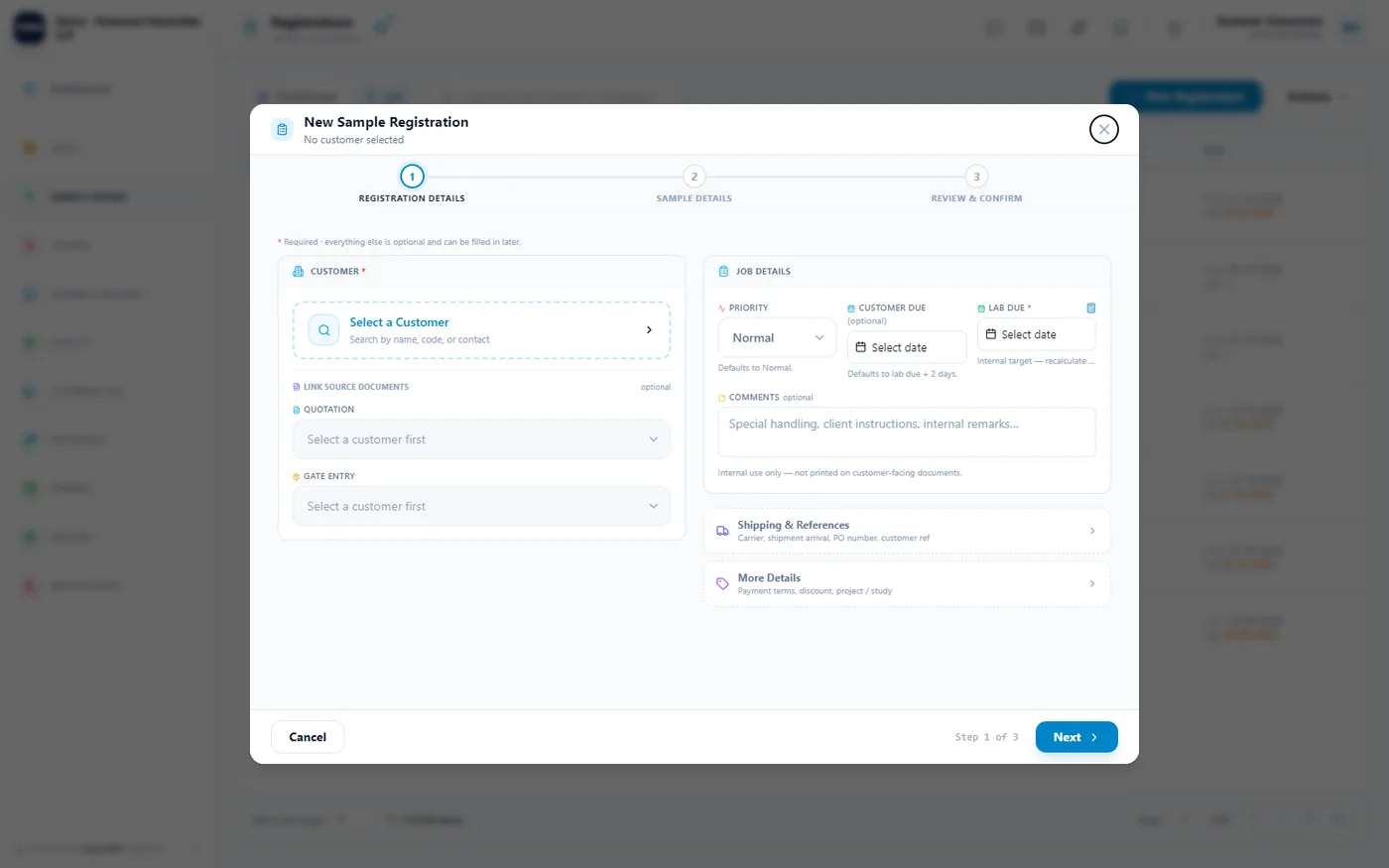
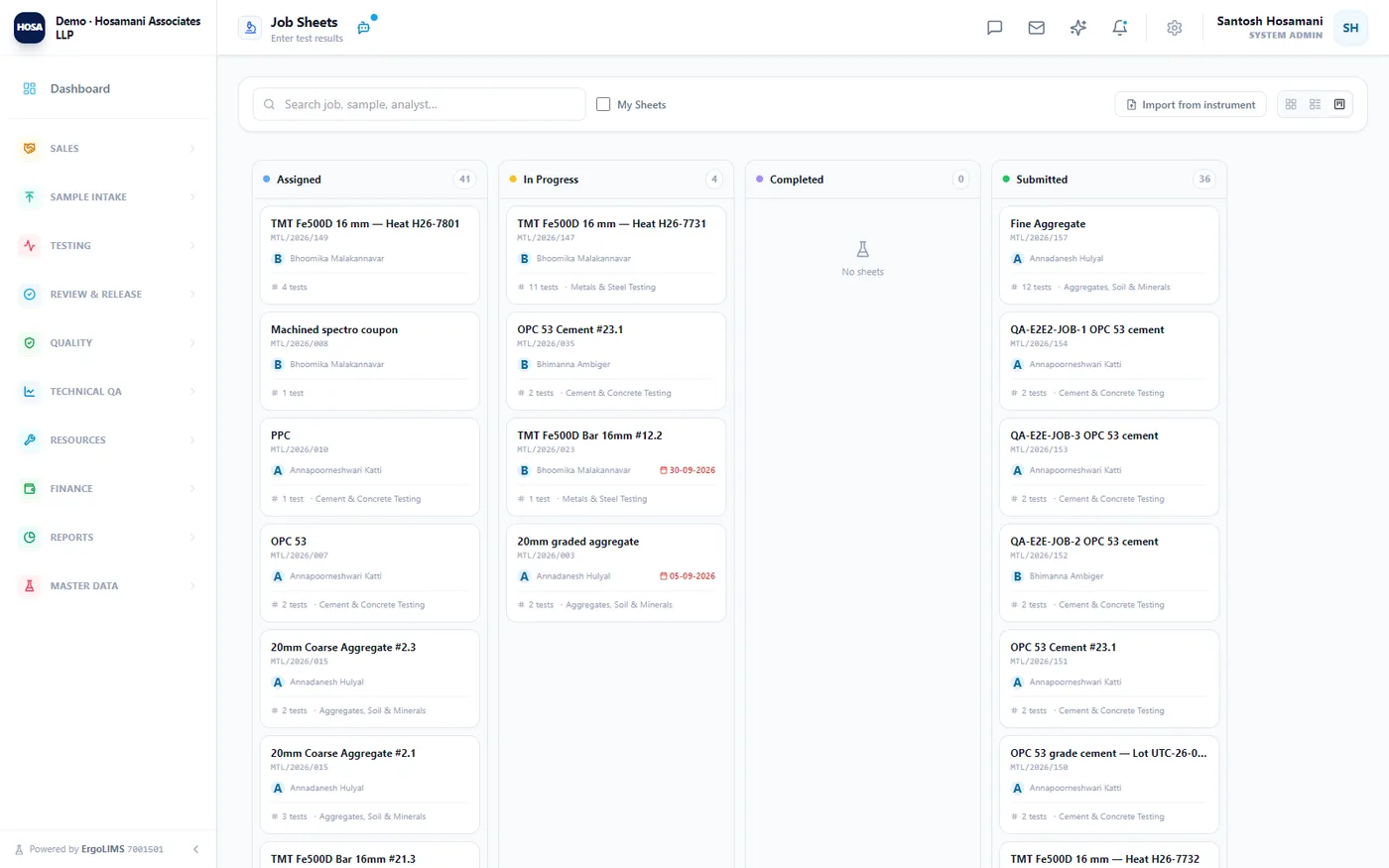
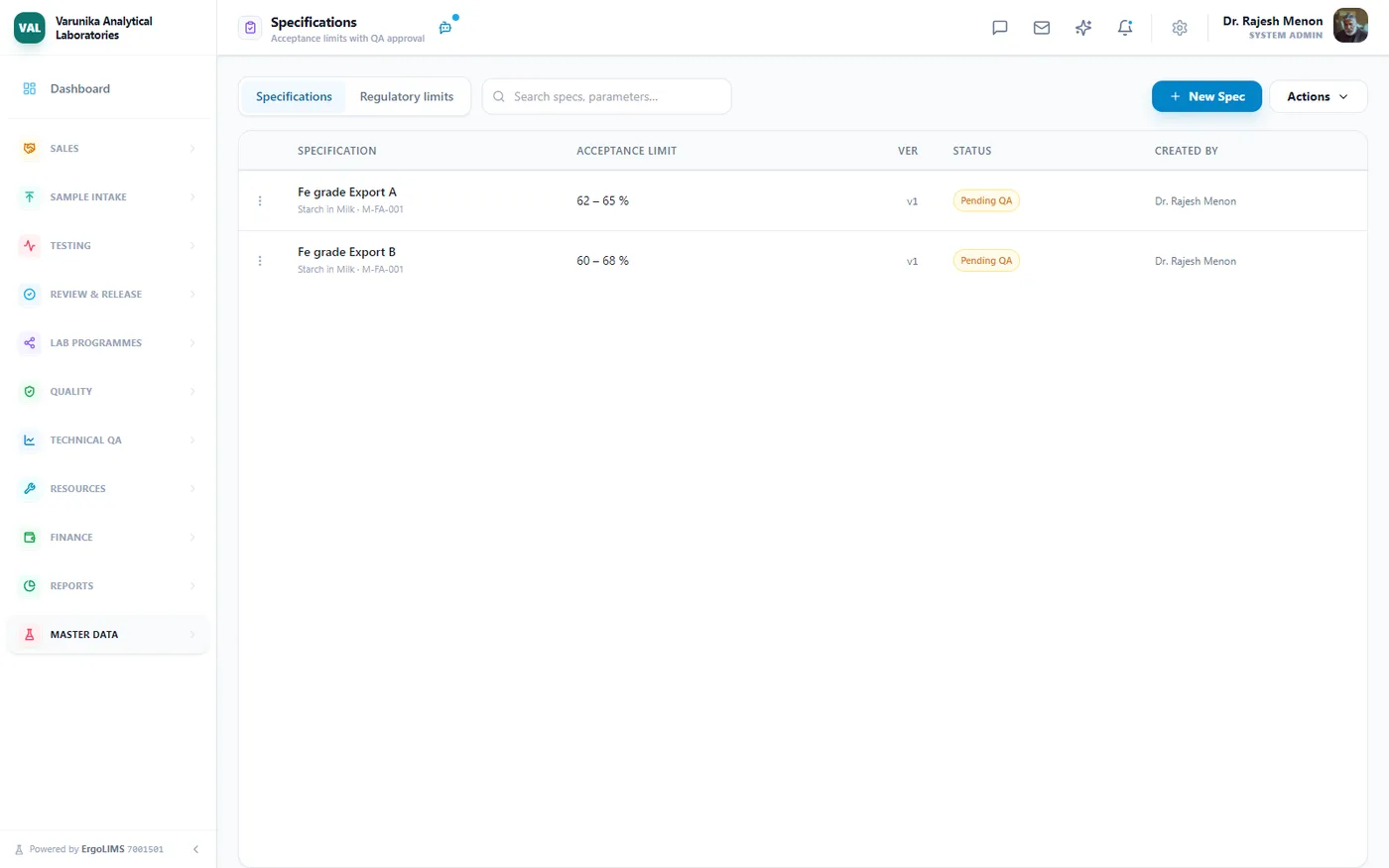
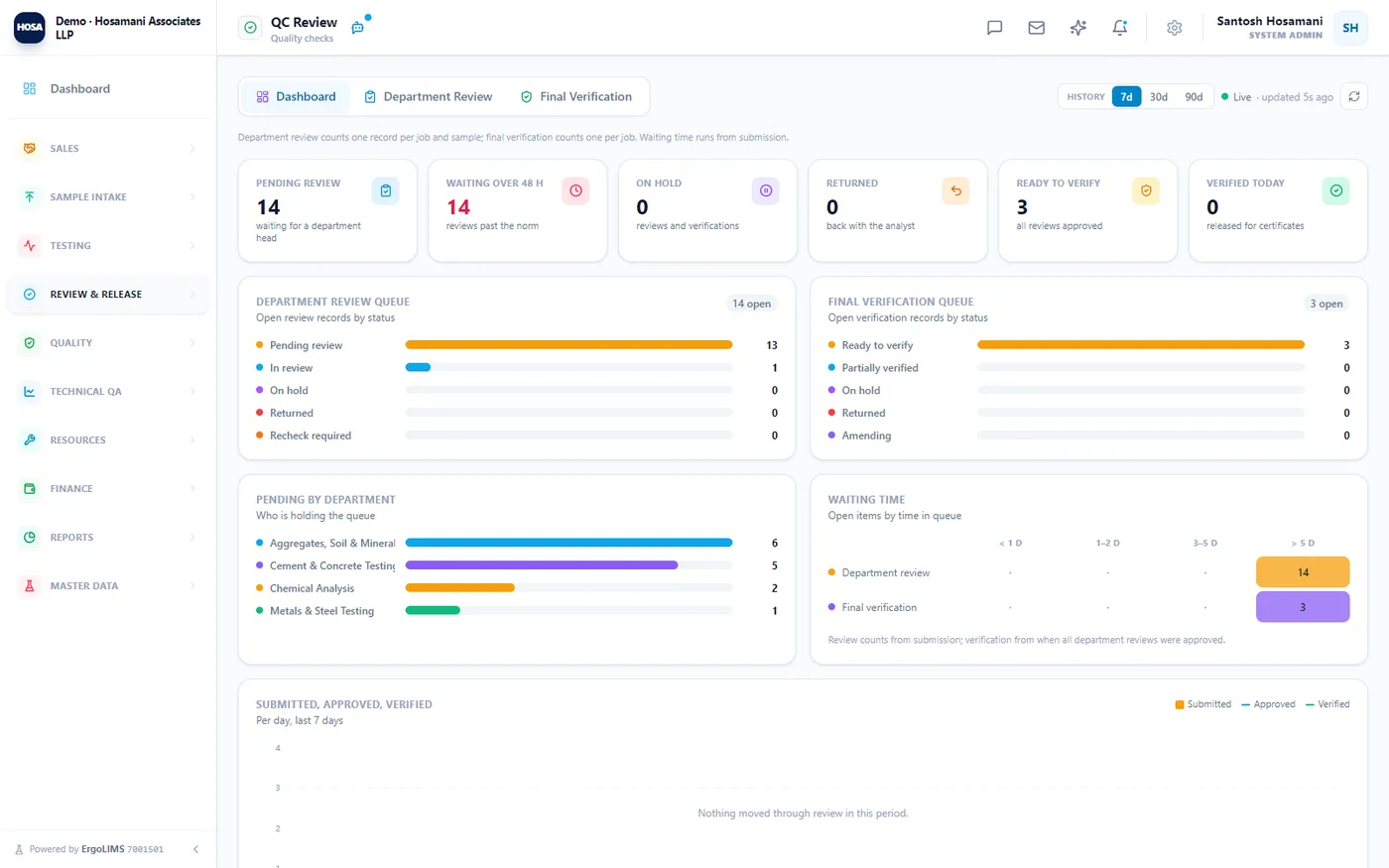
The registration form — three steps, with the customer-committed date and the internal lab target kept as separate fields.
Three people in the lab, three different wins
Watch chemistry and micro converge on one certificate without chasing either department.
Show an FSSAI auditor the full chain: batch received, tests run, who reviewed, what was released.
Bill accurately per batch, with GST invoicing tied to the jobs that were actually completed.
Compliance a food assessor will recognise
FSSAI FSS 2011
Composition and adulteration limits pre-loaded, with conformity wording on the certificate.
NABL & ISO/IEC 17025
ULR-numbered reports, method validation and MU records aligned to your scope.
Batch traceability
Batch, manufacturer and expiry bound to every result and every certificate.
And you do not start from an empty system
Choose the food domain at setup and ErgoLIMS provisions the scaffolding for you — as editable templates, not a locked configuration. FSSAI FSS 2011 and IS 1479 limits arrive as editable defaults — adapt to the commodities in your scope.
Questions we hear from food labs
See it run on your own parameters
A 30-minute walkthrough with the engineers who built it — using your methods, your limits and your reporting format, not a canned script.