Part 11 you can show, not just claim.
Pharma QC where the audit trail is enforced by the database rather than by policy — updates and deletes blocked at the storage layer, e-signatures bound to identity and reason, every batch traceable to the person who released it.
Capsules tumbling — drawn live in the browser, no two frames alike
Compliance claims are easy. Demonstrating them is not.
Most systems promise an audit trail and enforce it in application code — which means a database administrator, a migration or a bug can rewrite history. When an inspector asks to see immutability, the answer needs to be architectural.
Six things a pharma lab gets that a spreadsheet cannot give it
Each of these is a shipped capability, not a roadmap item.
Immutability enforced where it cannot be argued with
Updates and deletes on regulated records are blocked at the database layer, and the activity log is append-only with row-hash tamper protection. This is architecture, not configuration — and it is visible in the product.
Signatures that carry meaning
Electronic signatures challenge identity and capture the reason for signing at submission, review and approval — with signature meaning bound to the record, aligned to 21 CFR Part 11 principles.
Out-of-specification results become investigations
An OOS result opens a documented investigation with its own workflow and closure criteria. Nothing proceeds to release while an investigation is open.
Assay maths with uncertainty, computed server-side
Assay, uniformity and other calculated results are derived from analyst-entered variables with significant figures, rounding mode and expanded measurement uncertainty applied — and an execution log kept for each run.
Batch identity from intake to release
Batch number, manufacturing and expiry dates, shelf life and the QP or batch releaser are captured at registration and travel with every result to the certificate.
Certificates under version control
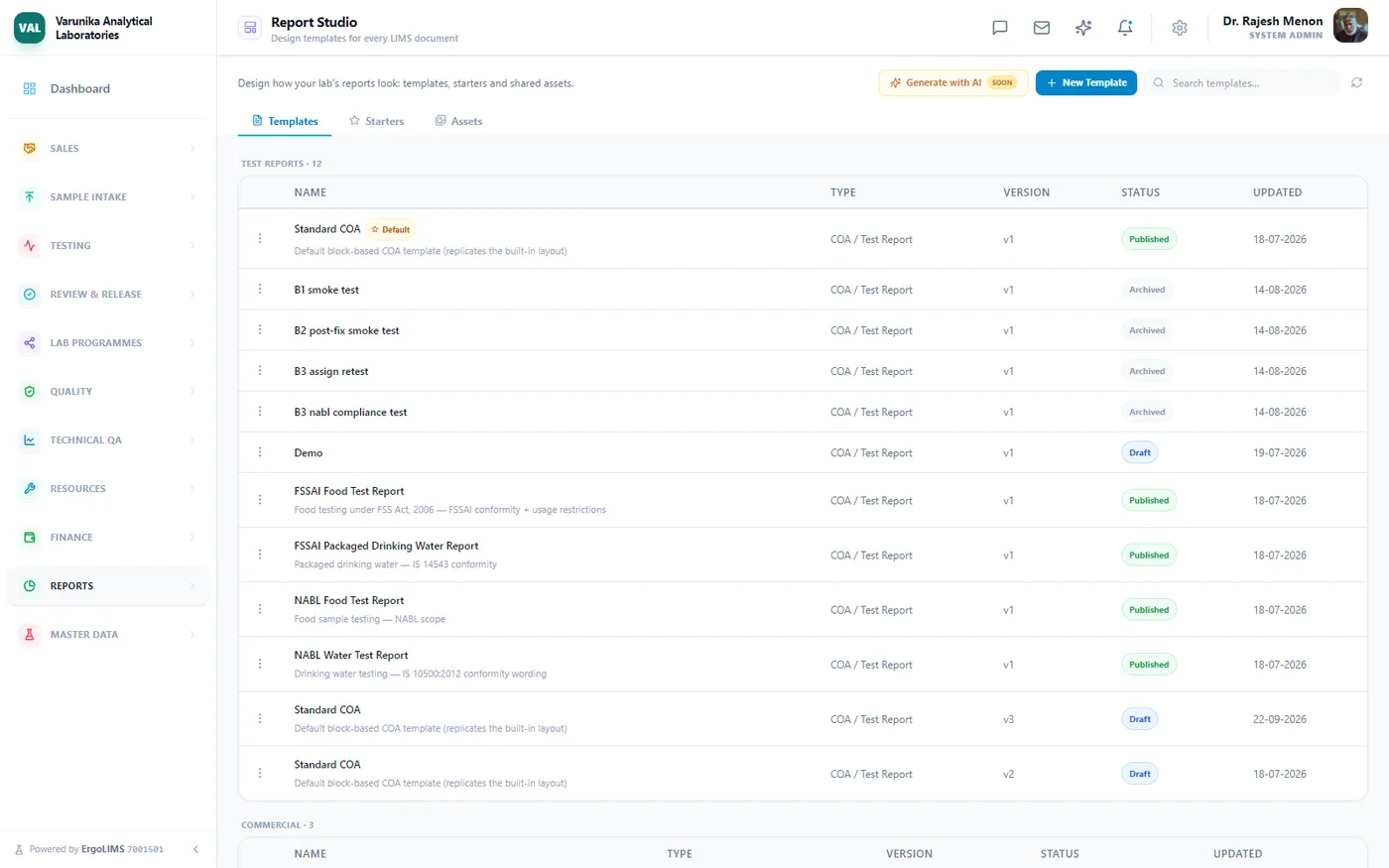
Report Studio templates are versioned with approval gates, so a change to a COA format is reviewed and traceable — not applied silently to every certificate that follows.
How a pharma sample moves through the system
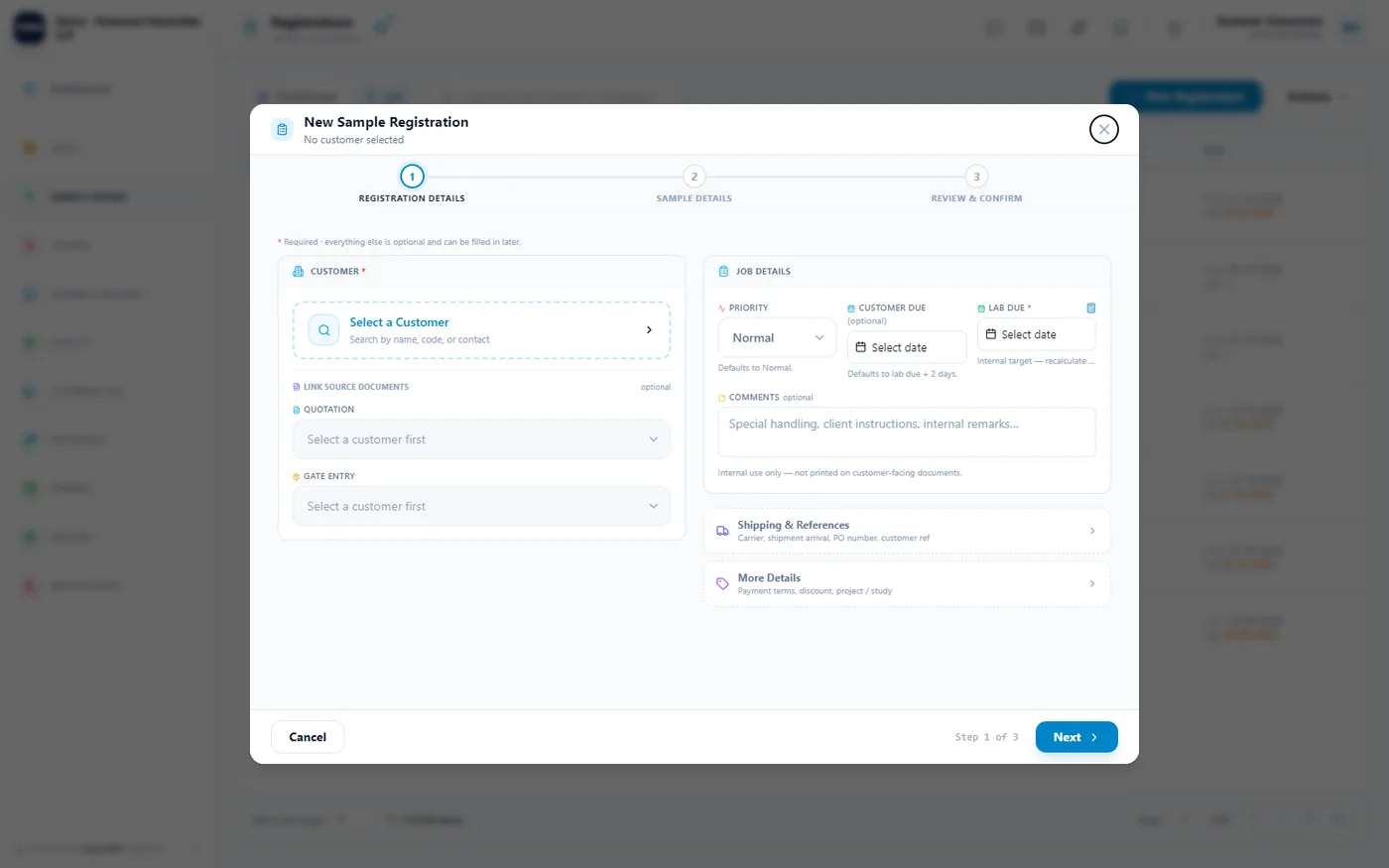
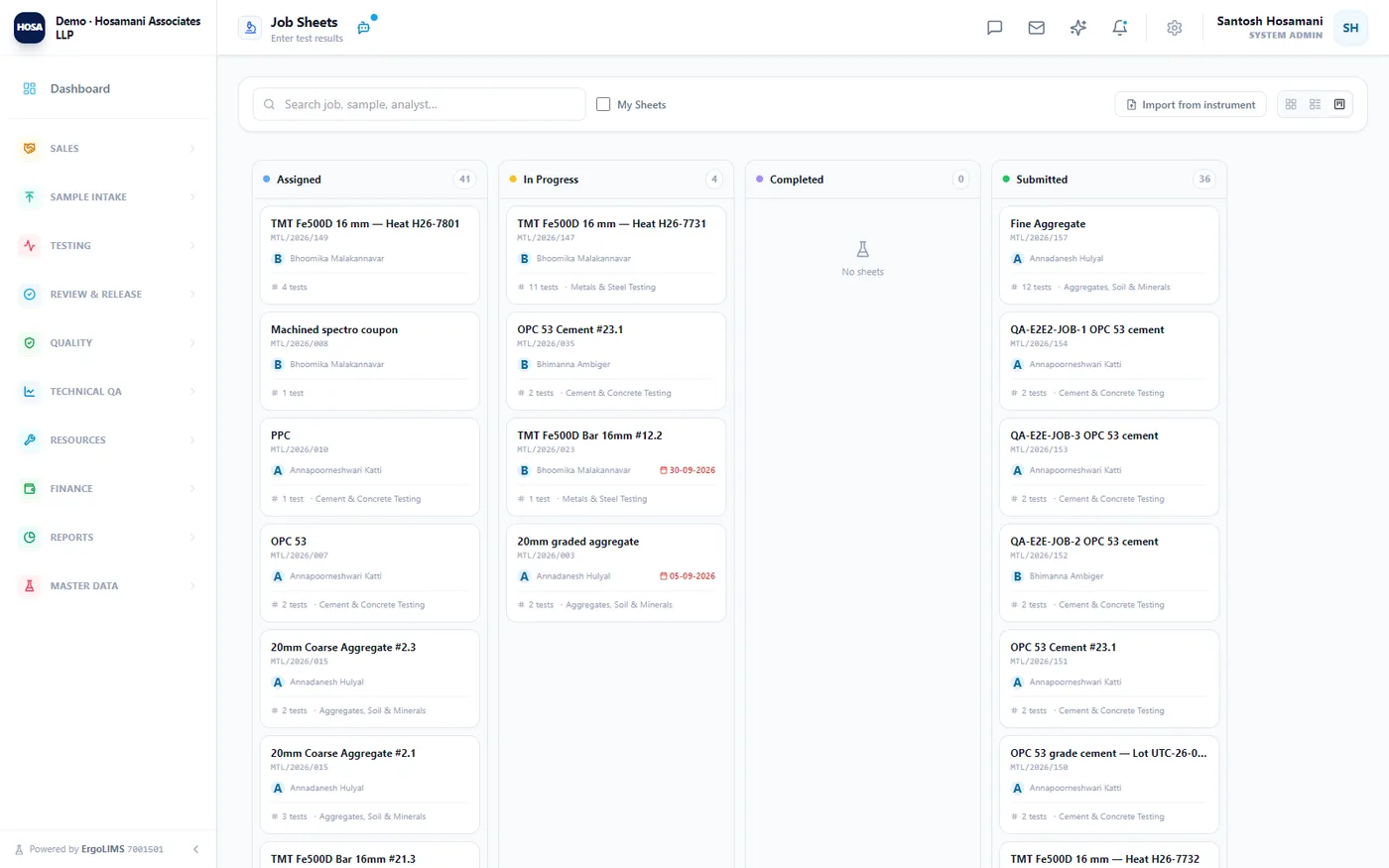
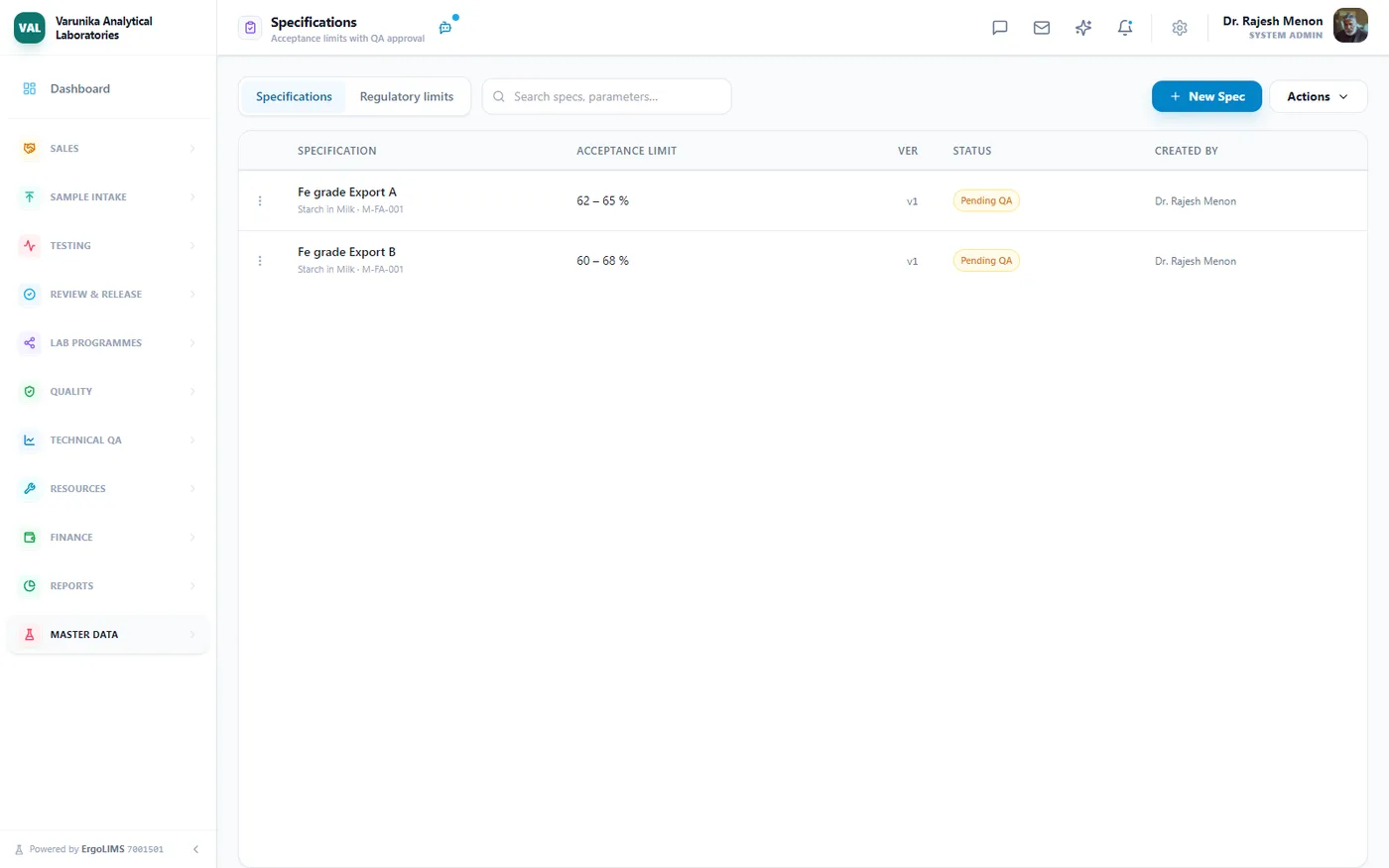
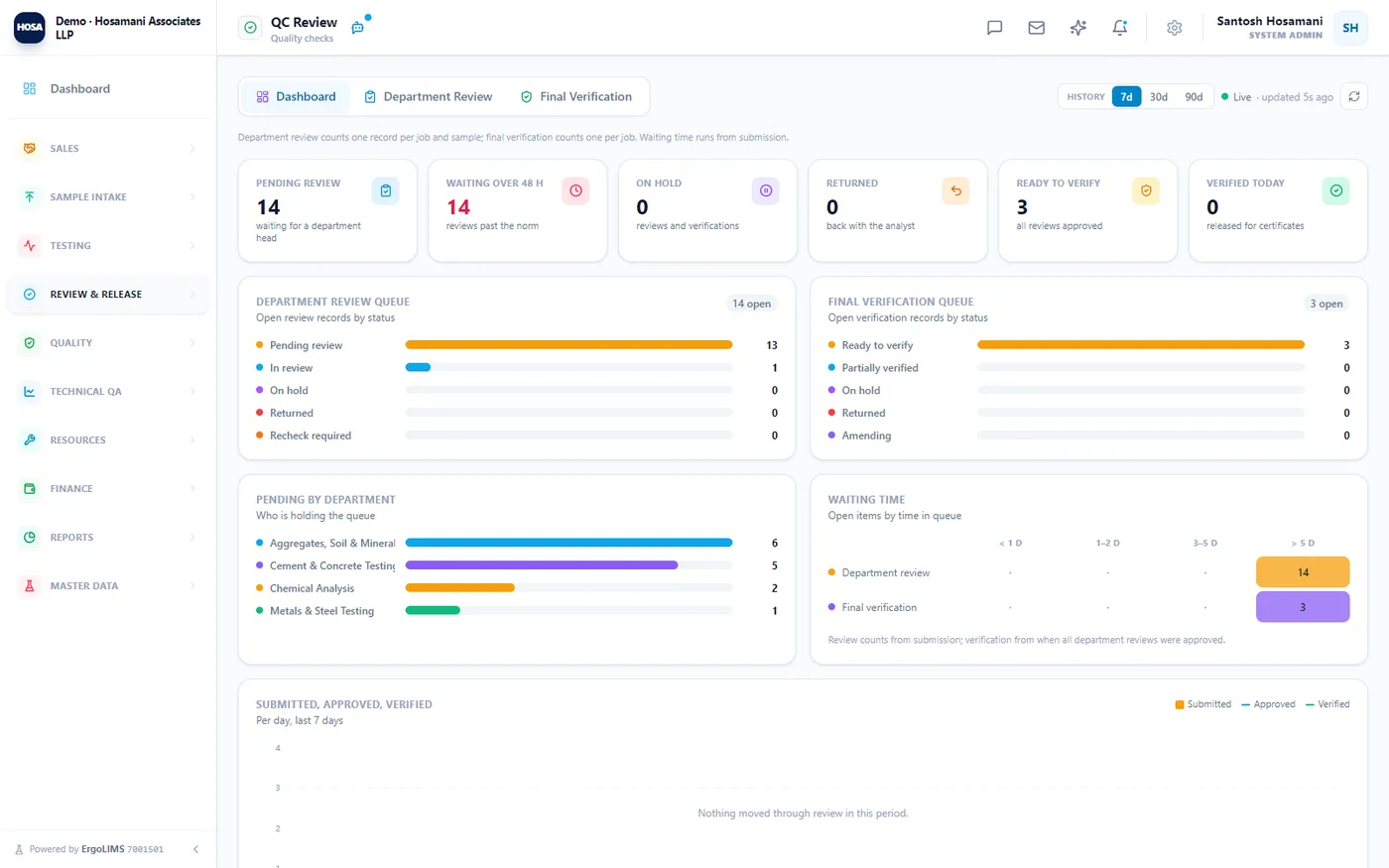
The registration form — three steps, with the customer-committed date and the internal lab target kept as separate fields.
Three people in the lab, three different wins
Run the batch queue with OOS and stability work visible in one place.
Answer a Part 11 question by showing the mechanism — append-only storage, row-hash protection, signature meaning.
See release status and turnaround by product without asking QA to compile it.
Compliance a pharma assessor will recognise
21 CFR Part 11
Append-only records with row-hash tamper protection; e-signatures with identity challenge and reason capture.
IP 2022 & ICH Q3A
Acceptance criteria pre-loaded with monograph references; product-specific limits per specification.
GMP / WHO-GMP / CDSCO
Accreditation packs align records and workflows with GMP expectations, including QP release fields.
And you do not start from an empty system
Choose the pharma domain at setup and ErgoLIMS provisions the scaffolding for you — as editable templates, not a locked configuration. IP 2022 and ICH Q3A criteria arrive as editable defaults — monograph limits differ per product.
Questions we hear from pharma labs
See it run on your own parameters
A 30-minute walkthrough with the engineers who built it — using your methods, your limits and your reporting format, not a canned script.