Field evidence that holds up when a regulator reads it.
Air, water, soil and noise in one system — with collection metadata, exceedance detection and consent-specific limits built into the workflow, so an environmental report survives scrutiny.
Leaves on the air — drawn live in the browser, no two frames alike
The weakest link is between the field and the lab
Sampling sheets get transcribed. GPS coordinates end up in a notebook. A consent-condition breach is spotted after the report has been sent. Every gap becomes a question the lab has to answer later, usually under pressure.
Six things a environmental lab gets that a spreadsheet cannot give it
Each of these is a shipped capability, not a roadmap item.
Collection detail becomes part of the record
Sampling location, GPS coordinates, sampling depth or height, temperature at collection, chain-of-custody number and field blank ID are captured at registration as structured, searchable fields.
Consent breaches surface before the report leaves
NAAQS and CPCB norms are the default, and every result is evaluated on entry. An exceedance flags immediately and can be routed into investigation rather than discovered by the client.
Every client's consent conditions, honoured
Per-customer specifications override the seeded defaults, so each industrial client's own consent limits govern their samples while the method stays the same.
Air, water, soil and noise on one spine
Different matrices route to Air Quality, Water & Effluent, Soil & Sediment or Noise & Vibration, each with its own methods and limits — but one registration, one review chain, one reporting engine.
Derived values computed, not typed
Concentration corrections and derived parameters are calculated server-side from entered variables, with rounding and expanded uncertainty applied and every execution logged.
Reports a client can forward to a regulator
ULR-numbered certificates with QR verification — anyone receiving the report can confirm it is genuine and has not been revoked.
How a environmental sample moves through the system
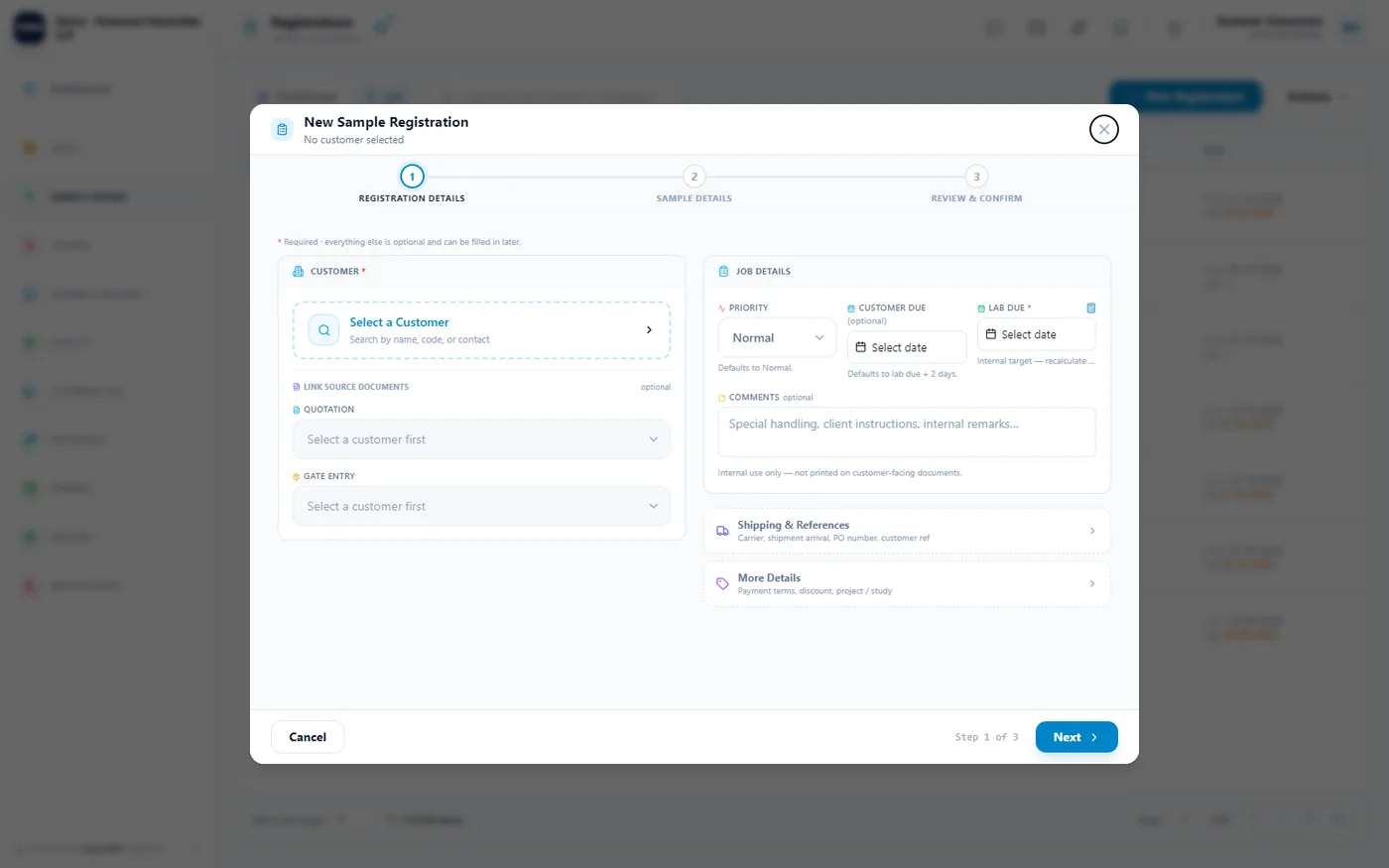
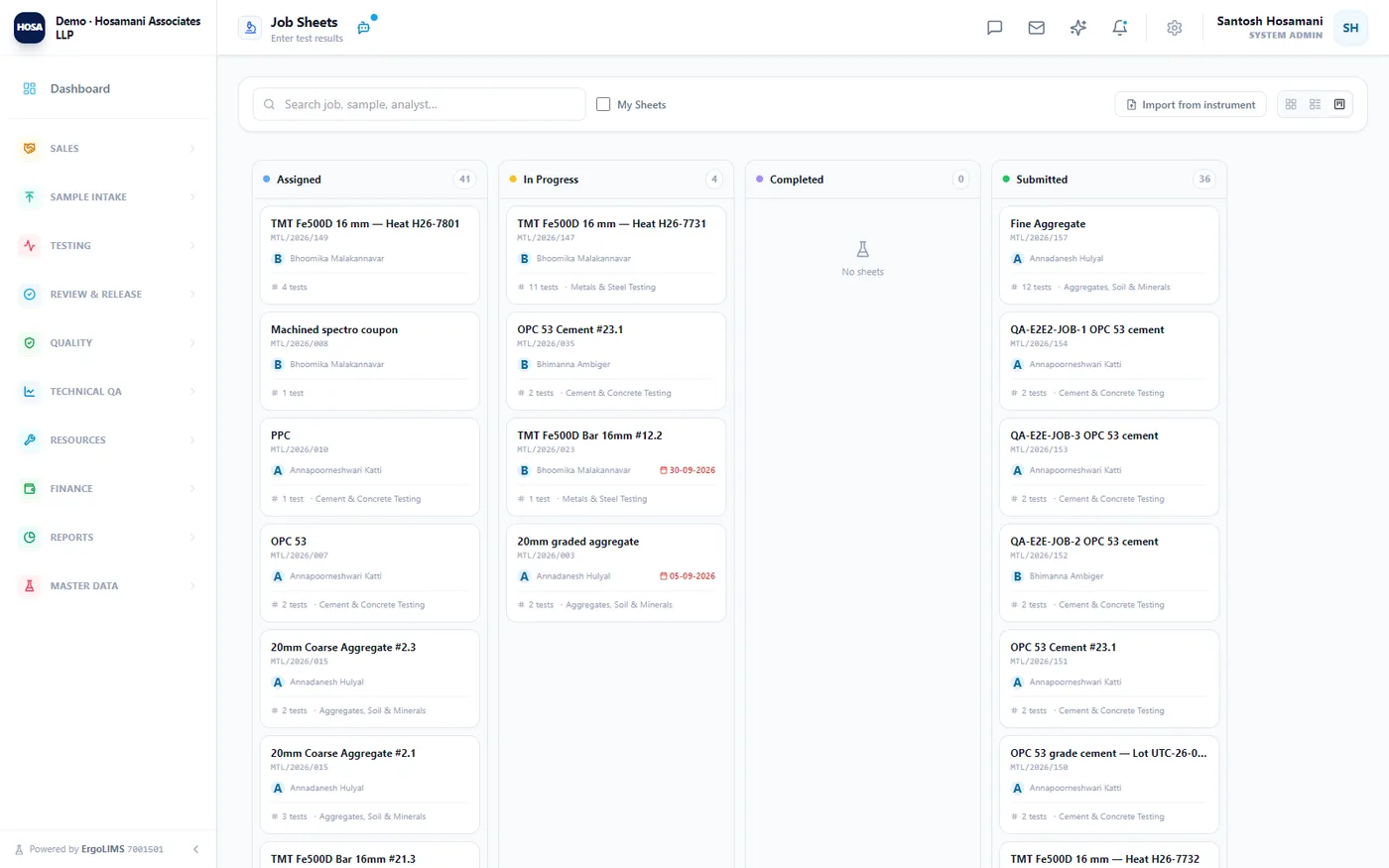
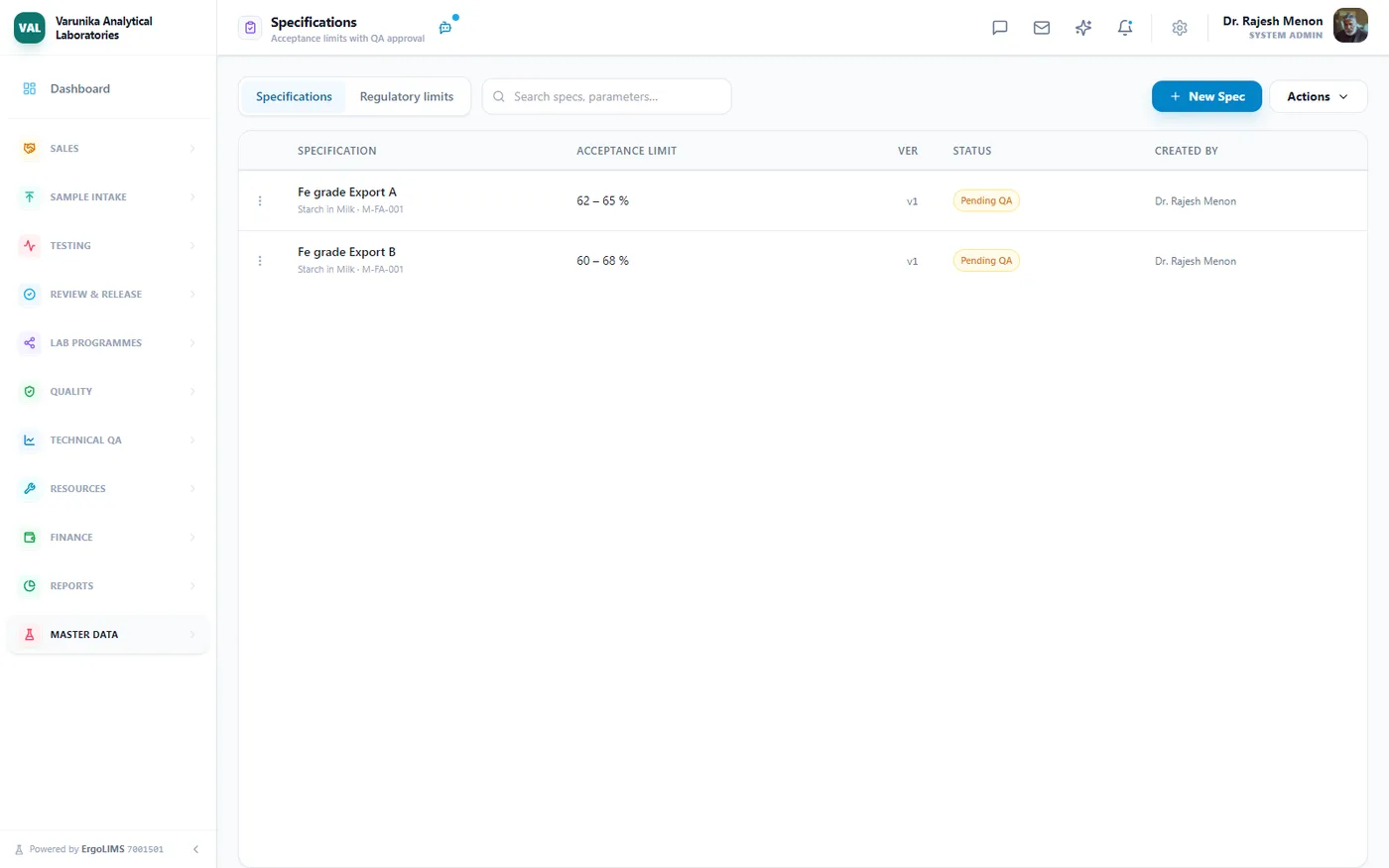
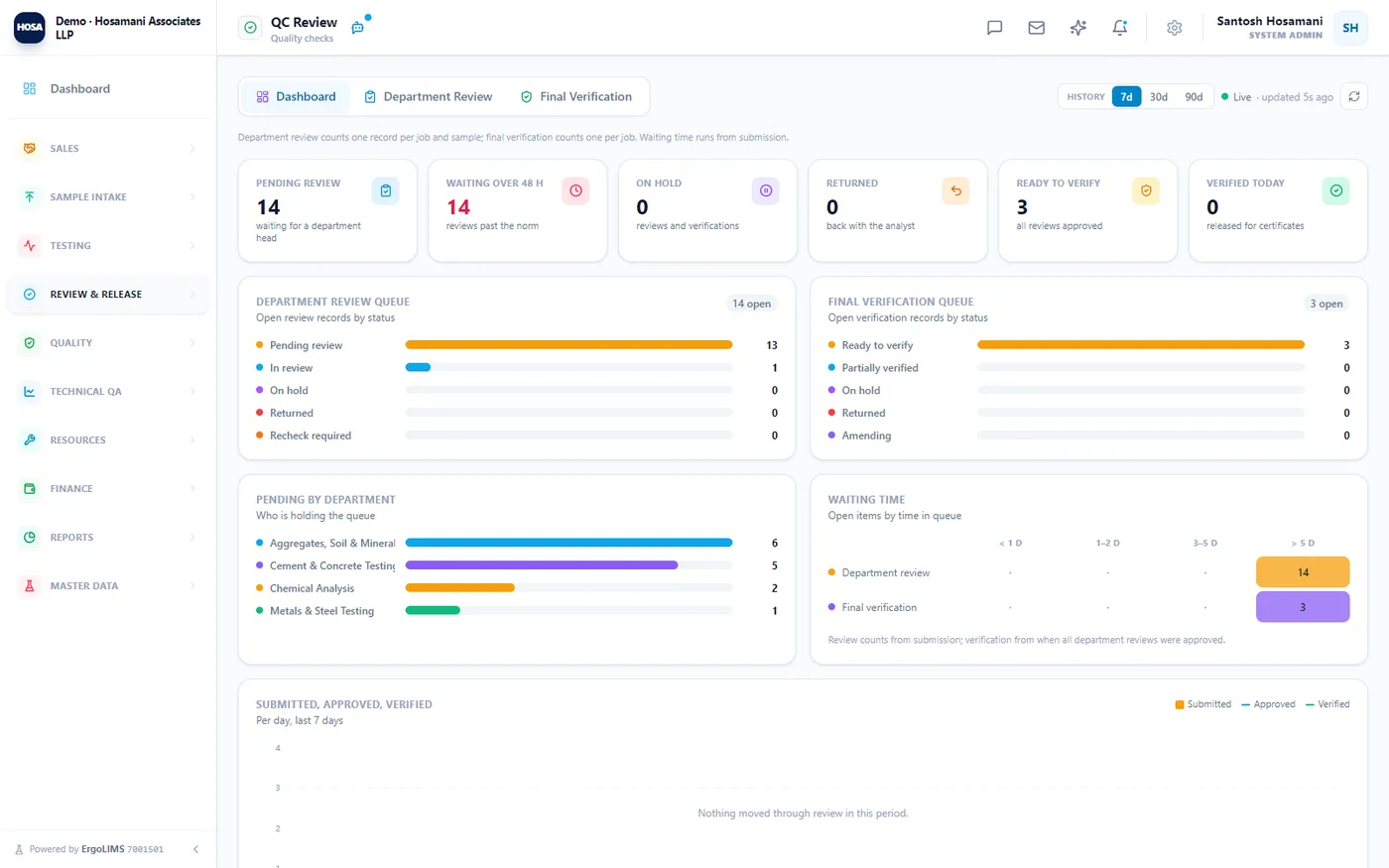
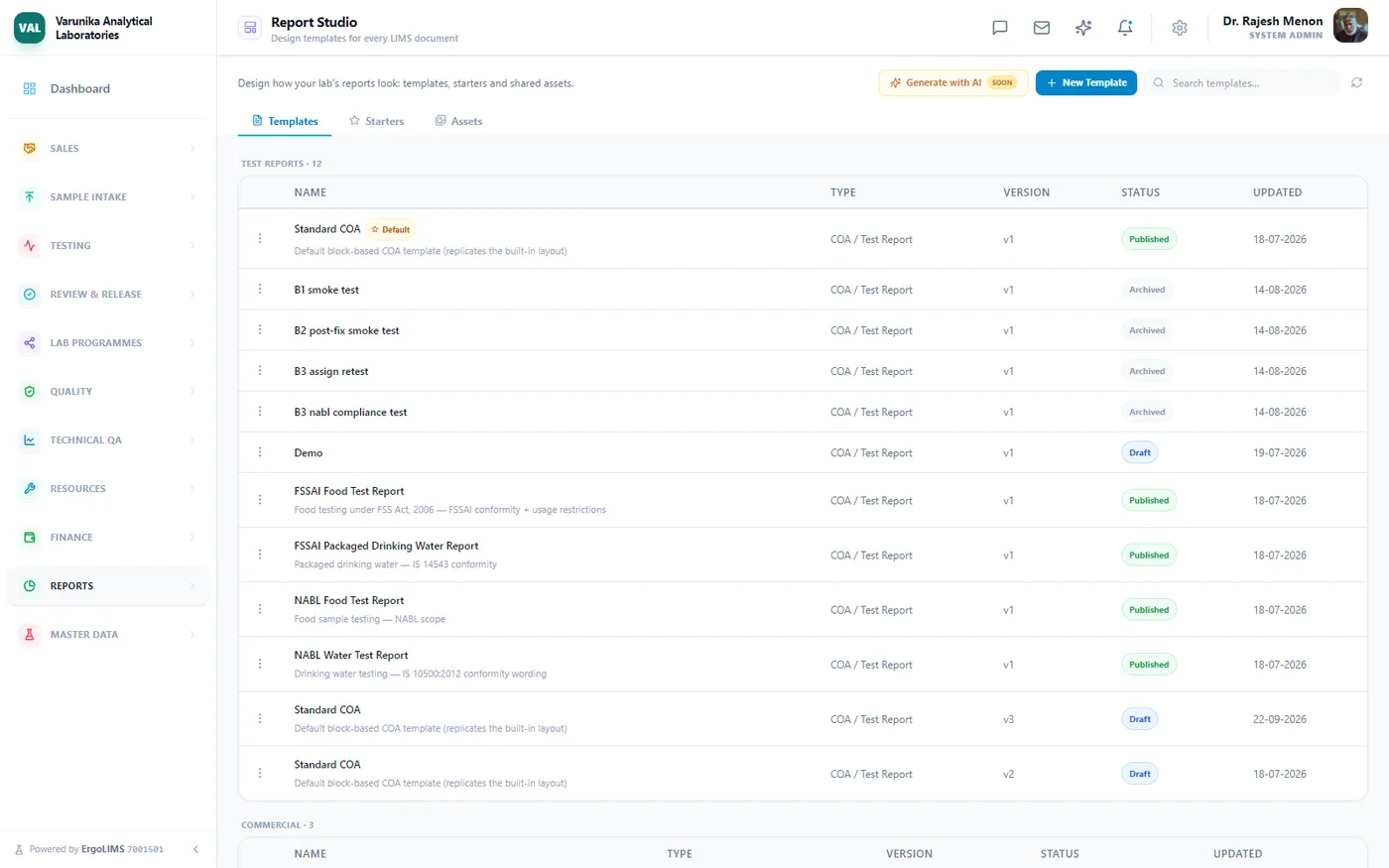
The registration form — three steps, with the customer-committed date and the internal lab target kept as separate fields.
Three people in the lab, three different wins
Track field teams and lab throughput together, with leave-aware workload redistribution when someone is out.
Produce the sampling and CoC evidence an assessor asks for without reconstructing it from paper.
See which clients and matrices actually earn, across 22 built-in MIS reports.
Compliance a environmental assessor will recognise
NAAQS 2009
Ambient air limits pre-loaded with the notification reference, evaluated on entry.
CPCB norms
General effluent discharge limits seeded, overridable per consent condition.
NABL & ISO/IEC 17025
Field sampling records, CoC and MU tracking shaped for environmental scopes.
And you do not start from an empty system
Choose the environmental domain at setup and ErgoLIMS provisions the scaffolding for you — as editable templates, not a locked configuration. NAAQS 2009 and CPCB norms arrive as editable defaults — consent conditions vary; tune per client.
Questions we hear from environmental labs
See it run on your own parameters
A 30-minute walkthrough with the engineers who built it — using your methods, your limits and your reporting format, not a canned script.