Fuel that meets spec, proven to four decimal places.
Petroleum testing is a specification business. ErgoLIMS holds the ASTM and IS methods, evaluates every result against the grade the customer bought, and keeps the calculation reproducible long after the batch has shipped.
Barrels in motion — drawn live in the browser, no two frames alike
By the time a spec breach is noticed, the tanker has left
Flash point is typed into a spreadsheet. Viscosity is calculated on a calculator and re-typed. The BIS limit is checked against a printout pinned to the wall. If a batch is later disputed, reconstructing which instrument ran it, who signed it and what the raw readings were takes a day of digging.
Six things a oil & gas lab gets that a spreadsheet cannot give it
Each of these is a shipped capability, not a roadmap item.
The BIS grade is checked as the number lands
Flash point, cetane, viscosity, sulphur, water content, RON and Reid vapour pressure limits are pre-loaded. A result outside grade fails on entry and opens an out-of-specification investigation before a certificate can move.
Viscosity and gravity computed server-side
Analysts enter efflux time and tube constant, not the answer. The formula engine evaluates it on the server with your significant figures and rounding mode, applies expanded uncertainty to the GUM, and writes an execution log that can never be edited or deleted.
Sampling conditions travel with the sample
Batch, grade, sampling point, temperature at collection and supplier are structured registration fields. Temperature at collection matters for density and vapour pressure — so it lives on the record, not in a remark.
Instruments that lapse cannot certify
Flash point apparatus, viscometer baths, Karl Fischer titrators and XRF sulphur analysers carry calibration and maintenance schedules, with booking that the database itself prevents double-allocating.
Every customer's own specification
Beyond the BIS grade, you can hold per-customer and per-product specification overrides with versioning and approval. The same diesel sample is judged against the contract the buyer actually signed.
Result to invoice without re-keying
A verified batch produces a certificate from a versioned template, dispatched by email or WhatsApp, and an invoice with the correct GST treatment, HSN or SAC, and TDS/TCS where it applies.
How a oil & gas sample moves through the system
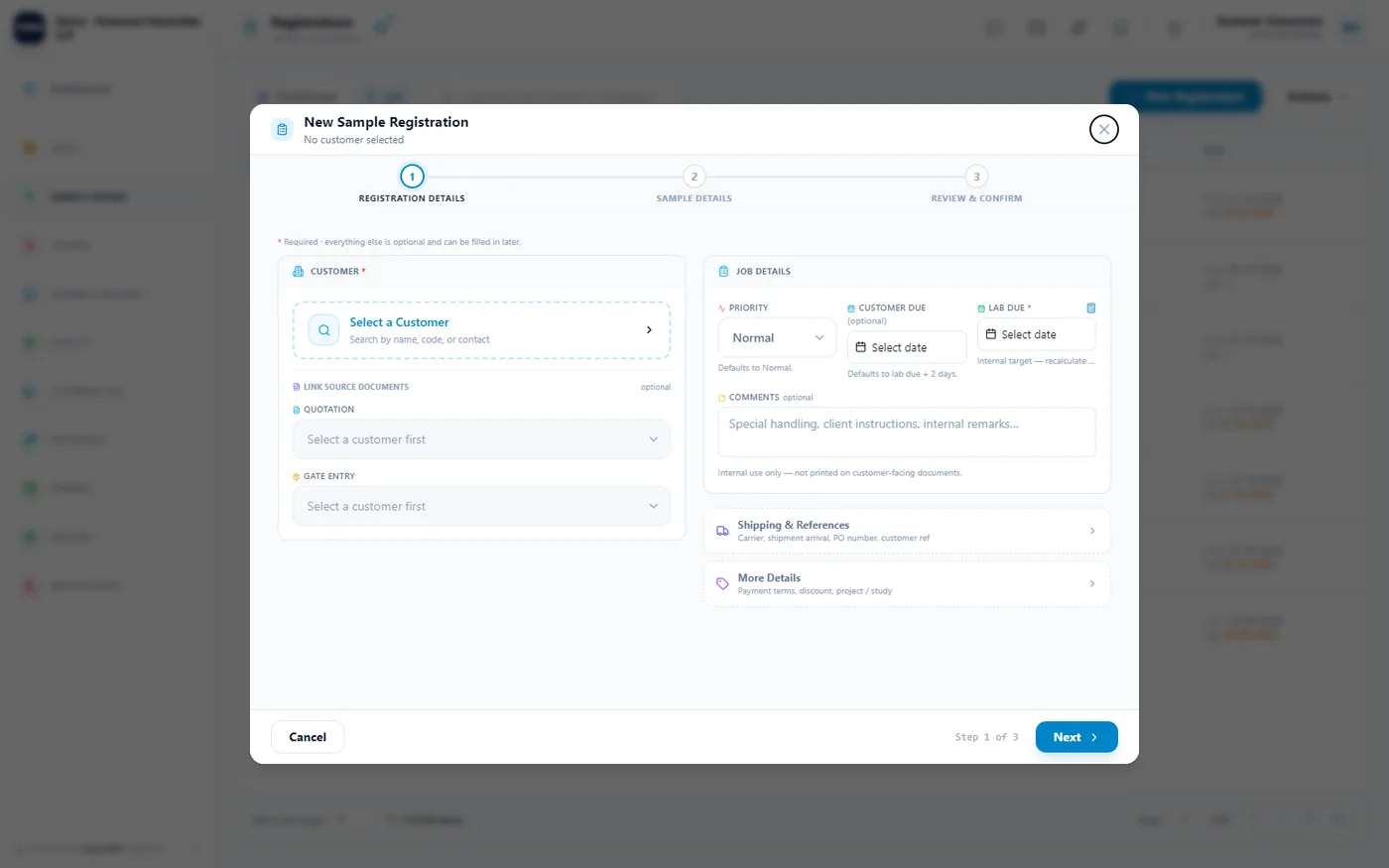
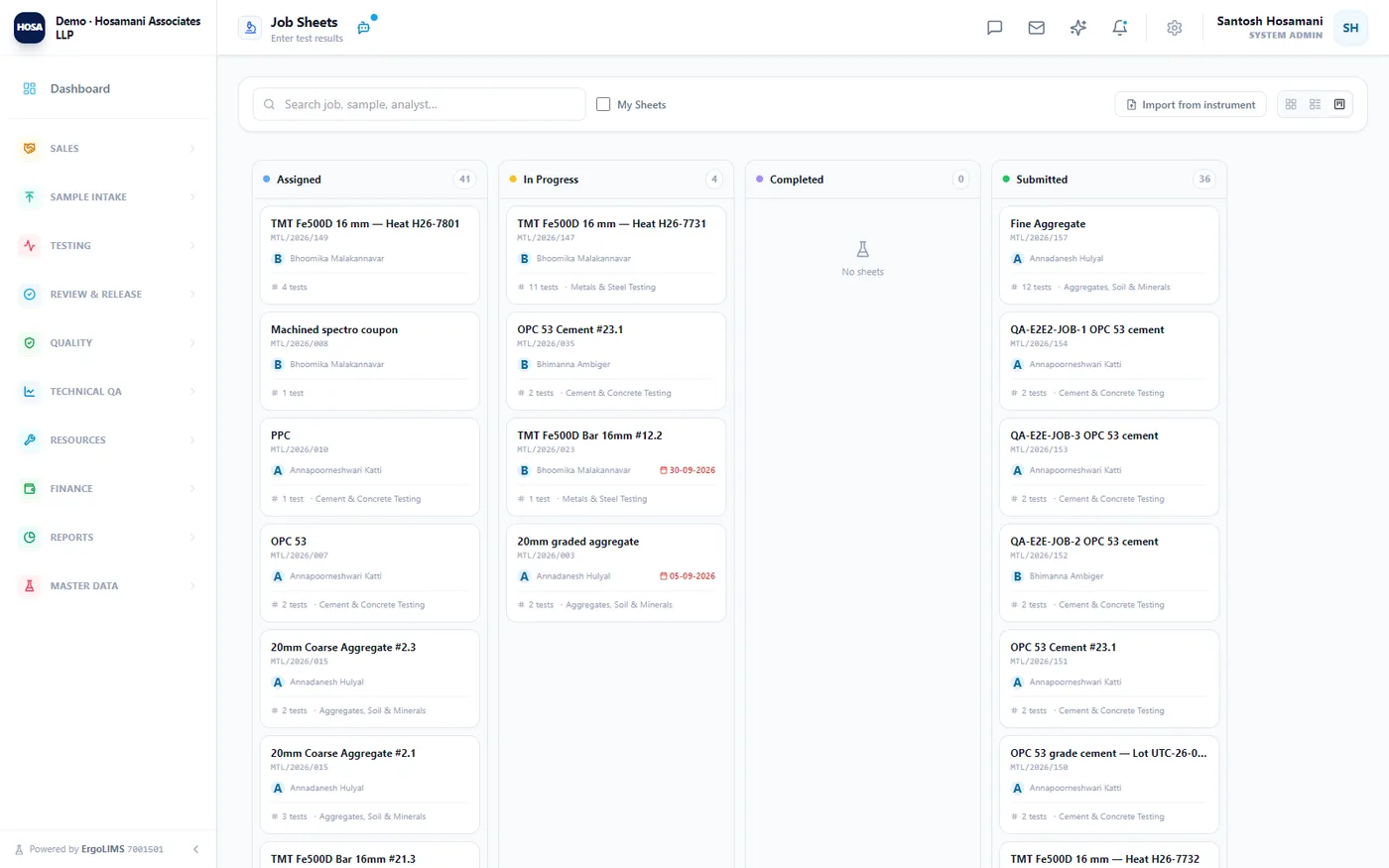
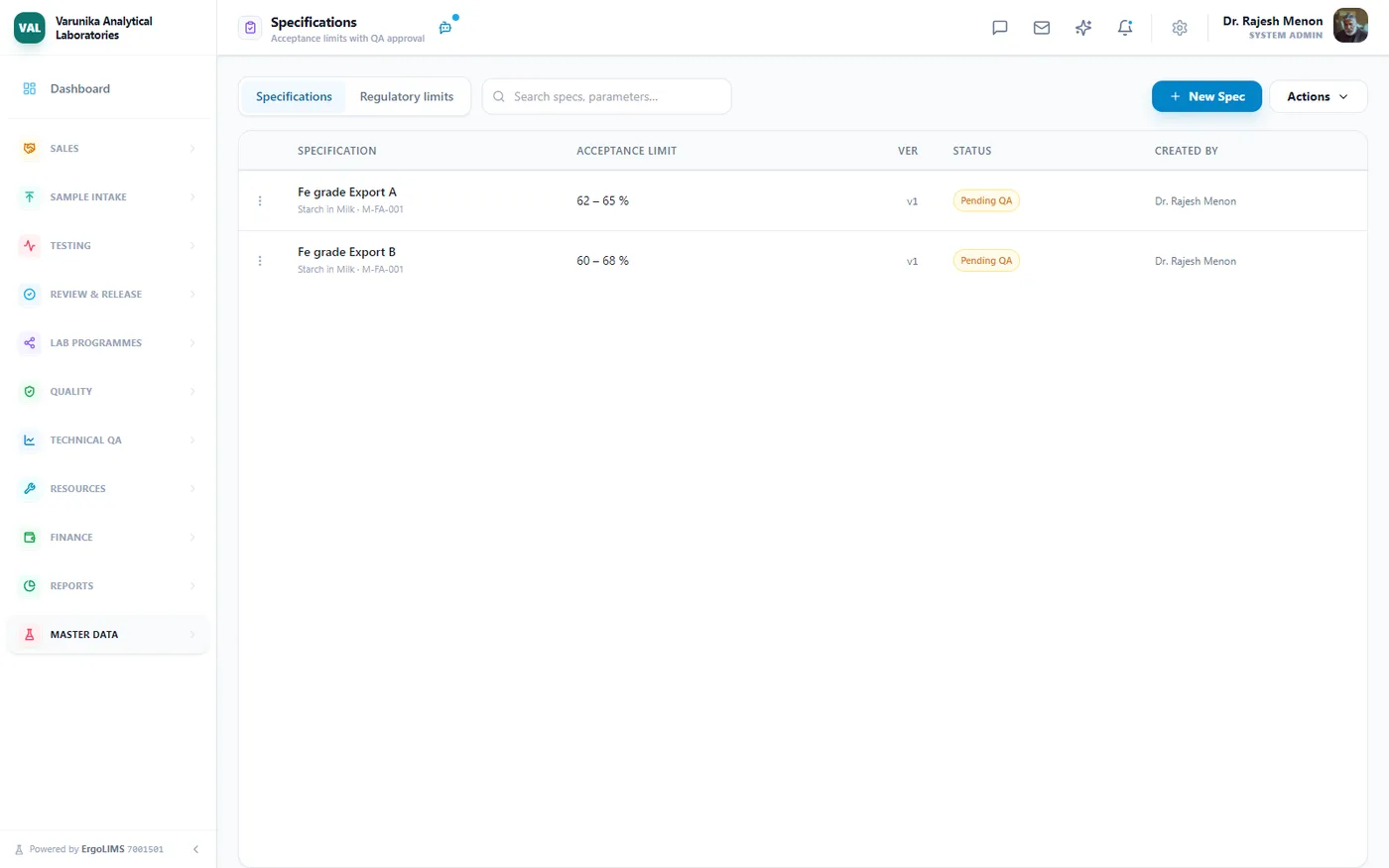
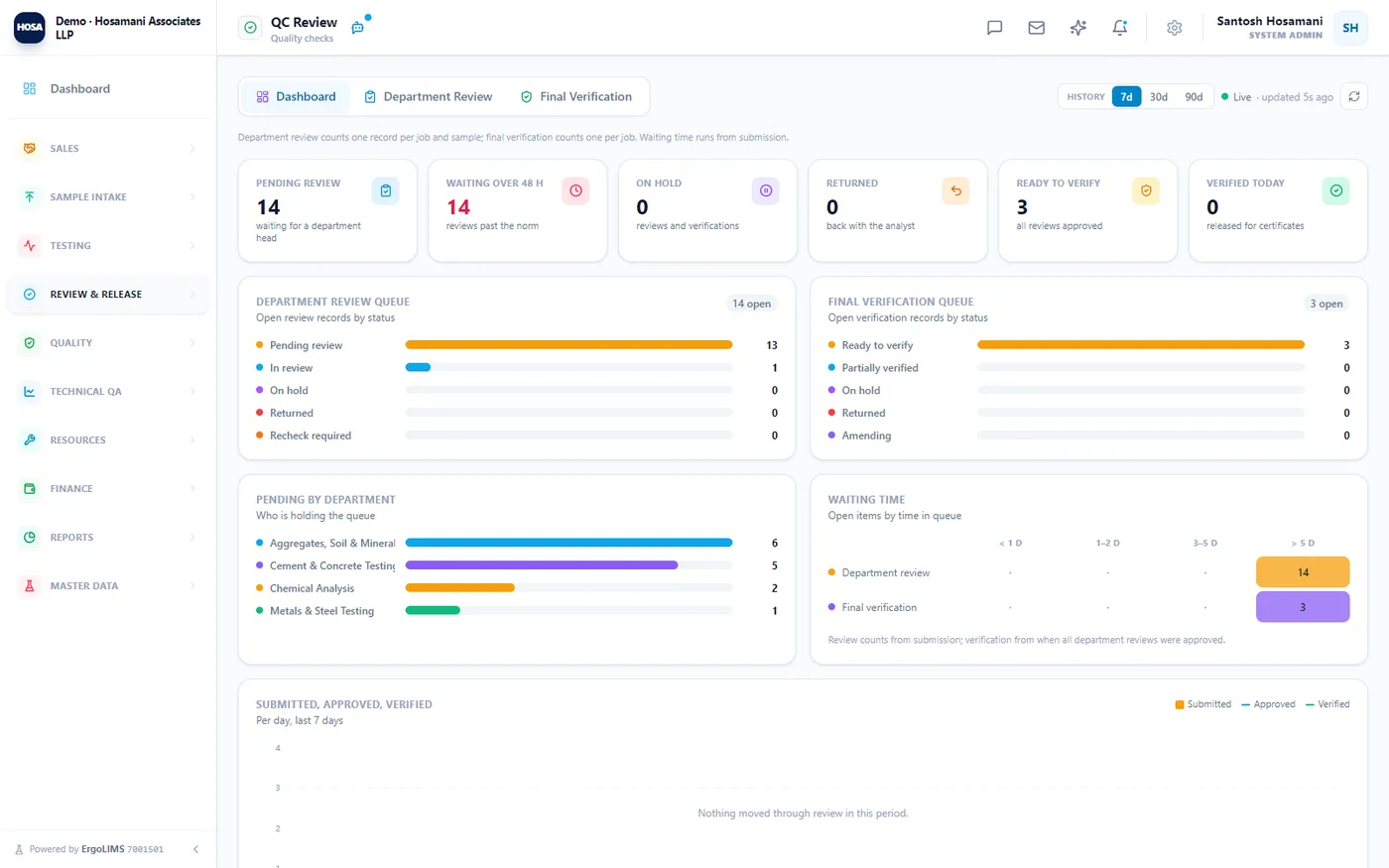
The registration form — three steps, with the customer-committed date and the internal lab target kept as separate fields.
Three people in the lab, three different wins
Enter efflux time and constant, not a computed viscosity — and stop defending arithmetic in review meetings.
Every off-spec batch carries an investigation with closure criteria, and every certified number traces to a calibrated instrument.
The customer's contract specification is held in the system, so the report is judged against what was sold.
Compliance a oil & gas assessor will recognise
ASTM · IS 1448 · IP
Twelve methods seeded across crude characterisation, fuel quality, lubricants and bitumen, each with its published reference.
NABL · ISO/IEC 17025:2017
ULR numbering, authorised signatories, method validation, proficiency testing and measurement uncertainty as first-class records.
Reproducible calculation
Formula versions are immutable once approved and every execution is logged — no update, no delete, enforced by database trigger.
And you do not start from an empty system
Choose the oil & gas domain at setup and ErgoLIMS provisions the scaffolding for you — as editable templates, not a locked configuration. Grade limits shown arrive pre-loaded. They are editable, versioned and can be overridden per customer or per product.
Questions we hear from oil & gas labs
See it run on your own parameters
A 30-minute walkthrough with the engineers who built it — using your methods, your limits and your reporting format, not a canned script.