Whatever arrives, you can answer for the number.
A general analytical lab lives on the strength of a single figure on a certificate. ErgoLIMS holds the digestion batch, the calibration curve, the instrument that was in date, the analyst who was trained and the specification it was judged against — behind every one of them.
Ring structures — drawn live in the browser, no two frames alike
The number is easy. Defending it three months later is not.
A chemical lab runs the widest method list of any discipline and the narrowest customer specifications. The result sits in an instrument export, the dilution factor lives in a notebook, the specification came in an email, and the analyst who ran it has left. When the customer disputes the figure, reconstructing it is archaeology.
Six things a chemical lab gets that a spreadsheet cannot give it
Each of these is a shipped capability, not a roadmap item.
The calculation is part of the record
The formula, the dilution factor, the significant figures and the expanded uncertainty are applied when the result is saved, not afterwards in a spreadsheet. Every execution writes a log, so the arithmetic that produced the reported figure can be re-read years later.
A lapsed instrument stops producing results
AAS, ICP, GC and HPLC all carry a calibration due date. When one passes, the instrument stops being selectable for result entry — the block happens on the server, so it holds regardless of which screen or API call is used.
Every customer’s specification, kept apart
Limits belong to the specification, not to the test. The same lead determination can be judged against a customer specification, an IS limit or a monograph, and the certificate records which one applied.
The analyst cannot approve their own work
Separation of duties is enforced server-side. The person who entered a result is refused when they try to approve it, and the reviewer sees the raw value, the calculation and the specification together rather than a bare number.
Digestion and extraction batches are traceable
Preparation references and dilution factors are captured at result entry, so a suspect digestion batch can be traced to every sample that went through it.
Certificates a customer can verify
Every issued certificate carries a QR code that resolves to a verification page. A withdrawn certificate returns a clear gone response rather than continuing to verify.
How a chemical sample moves through the system
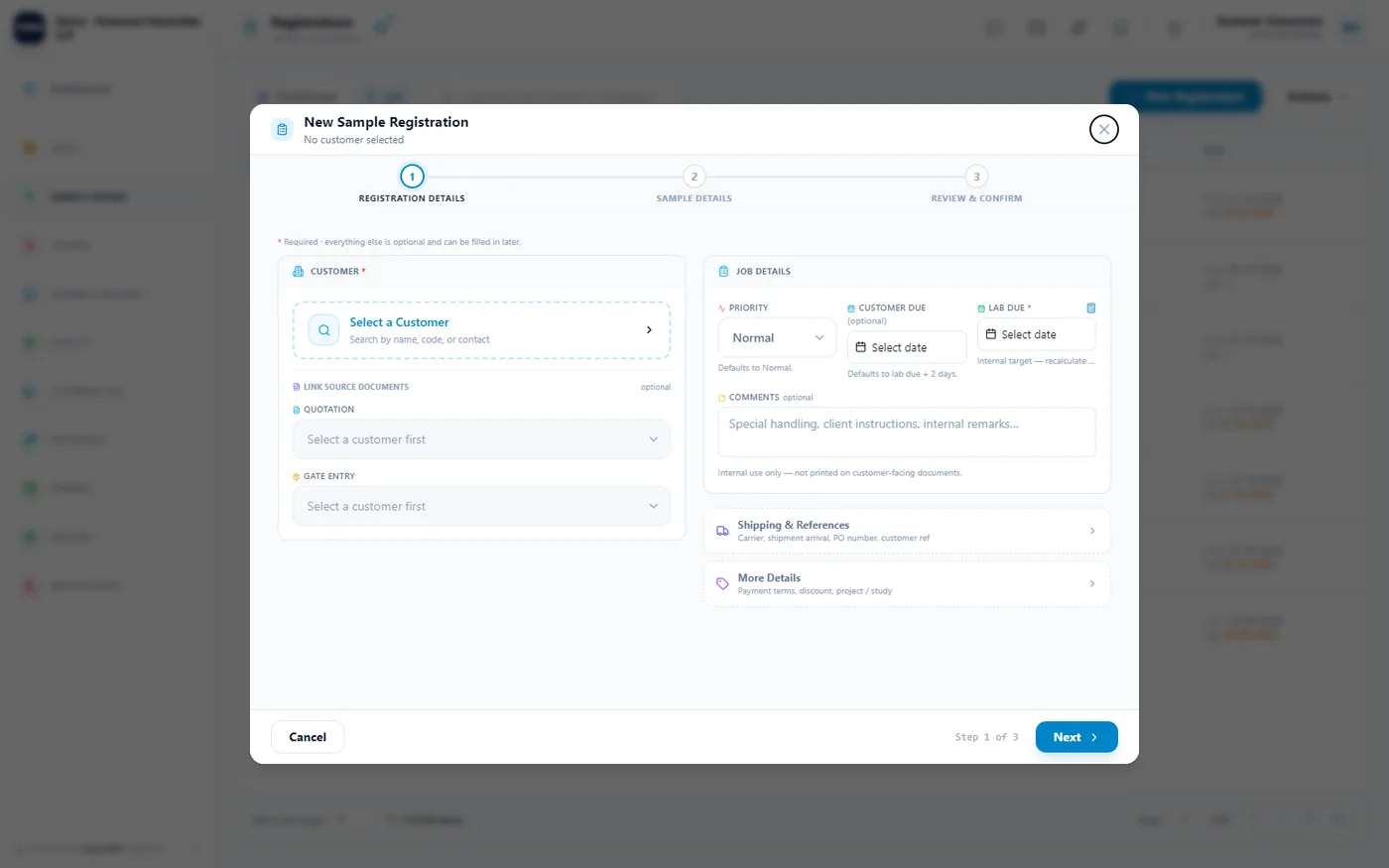
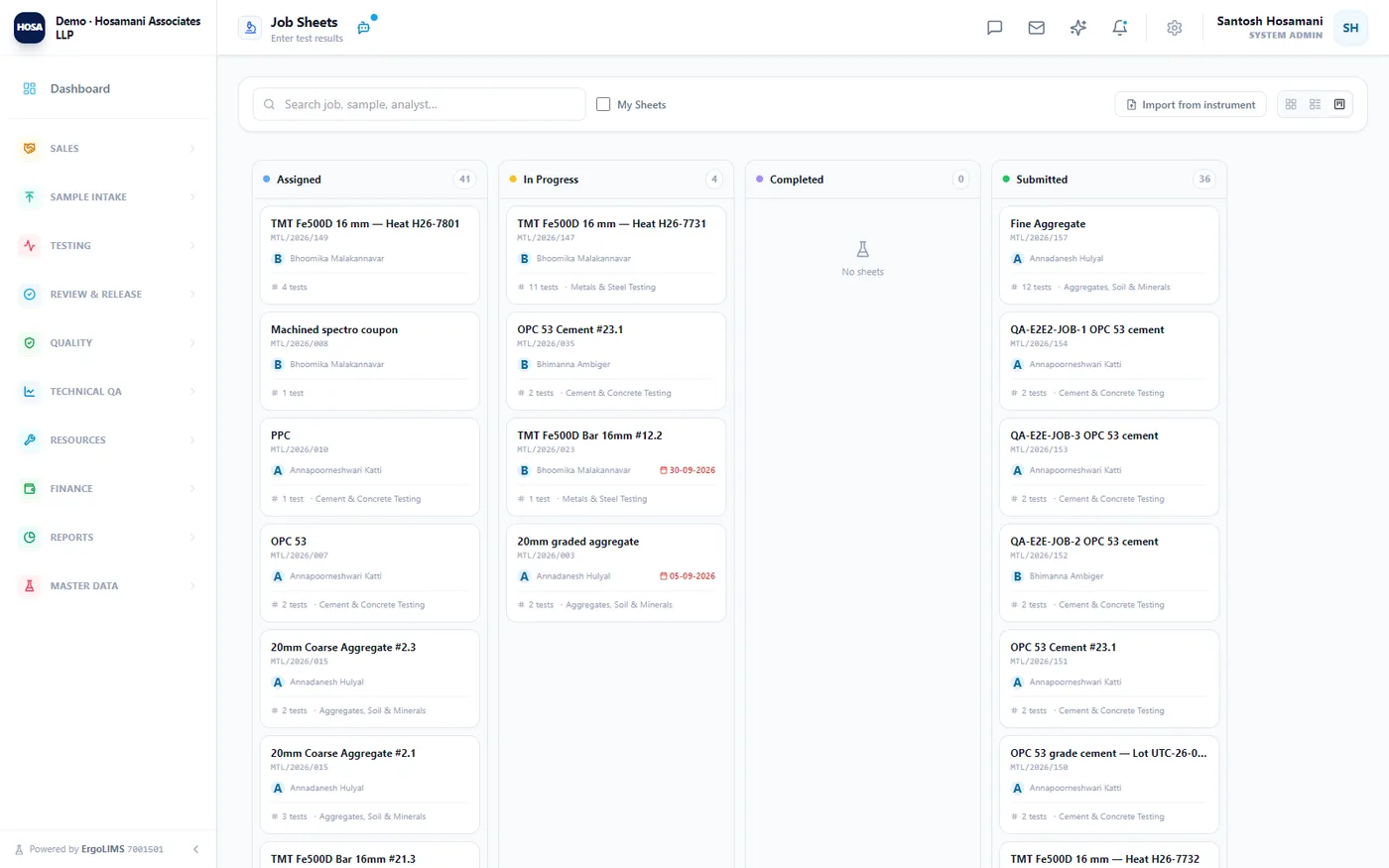
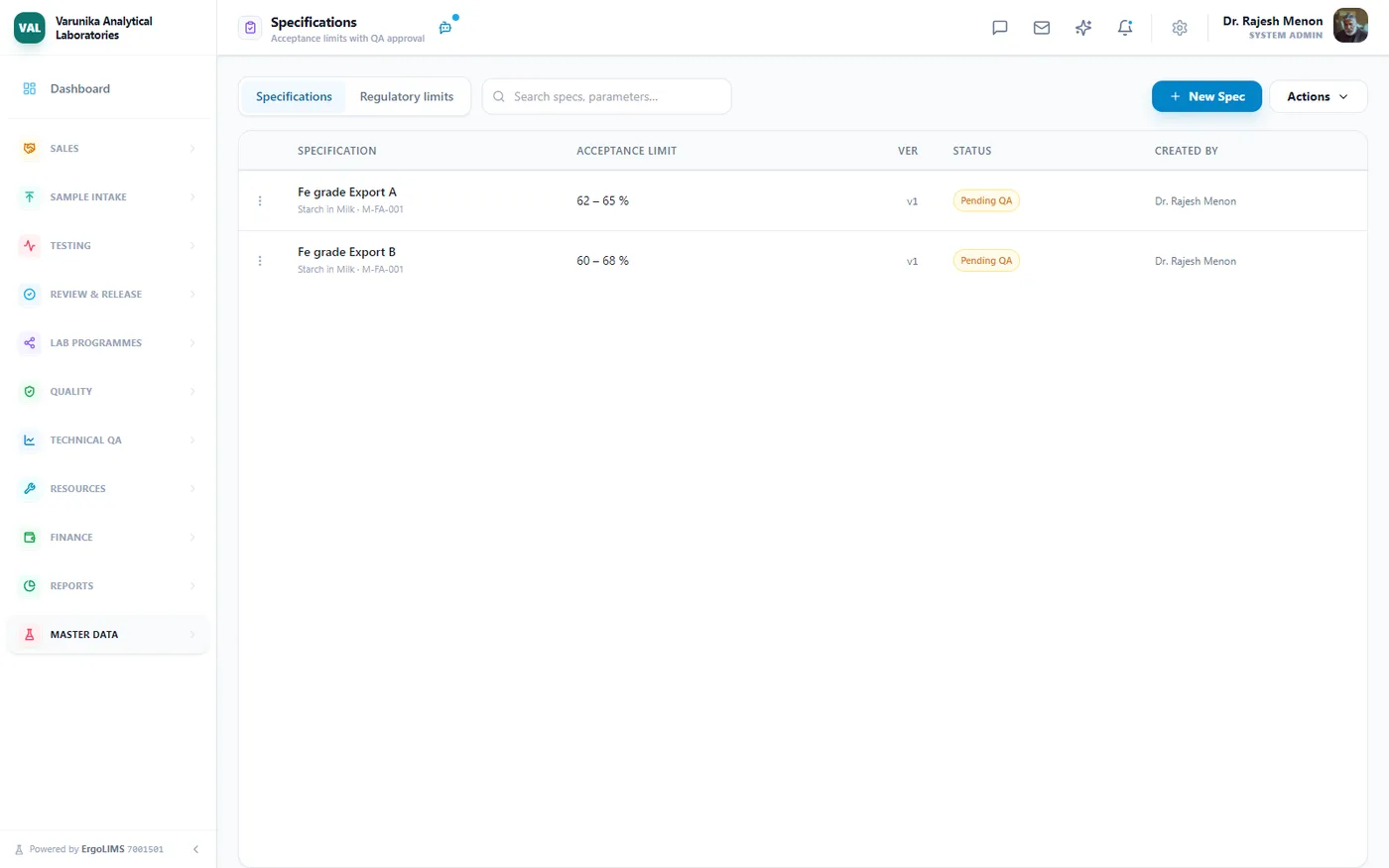
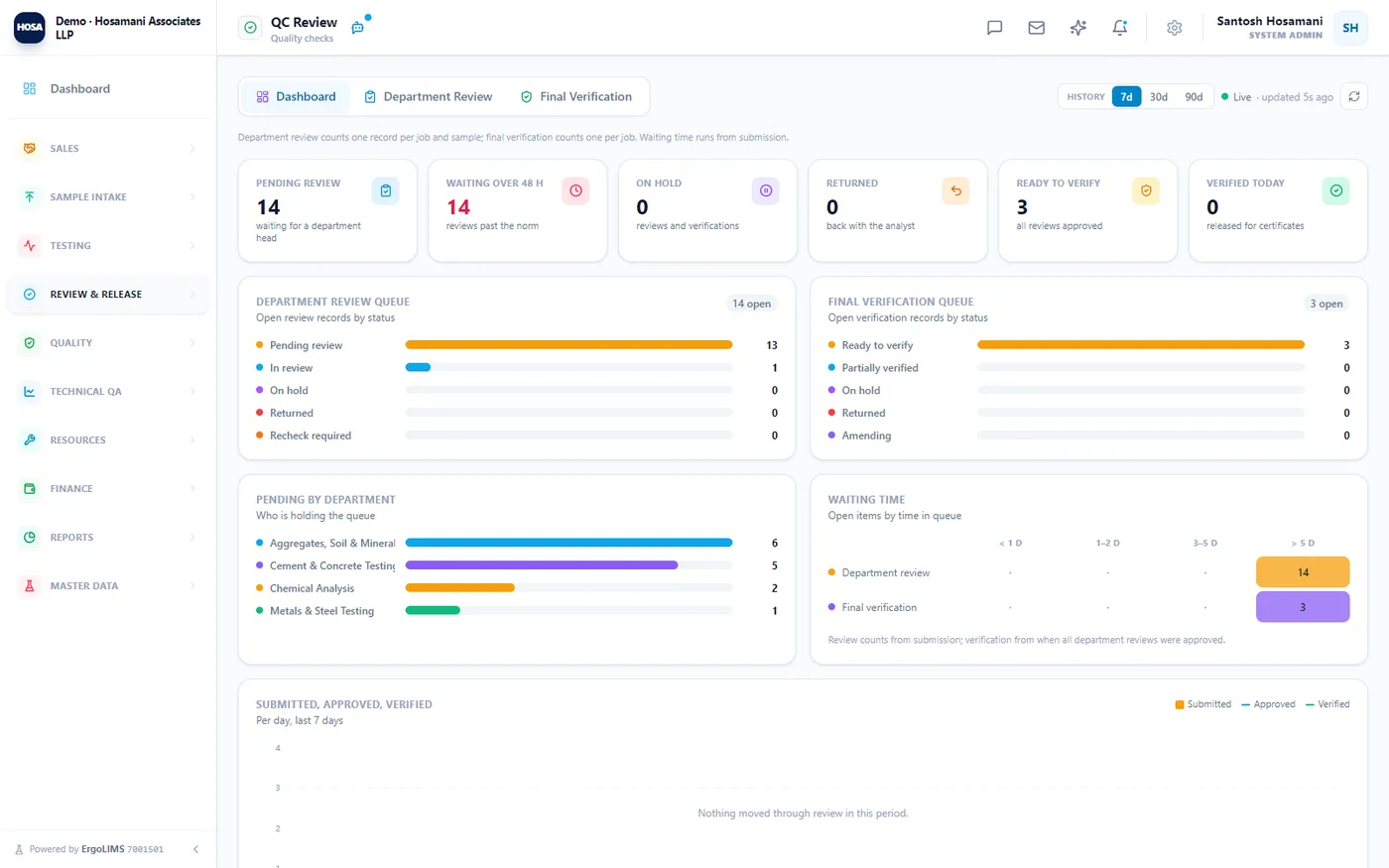
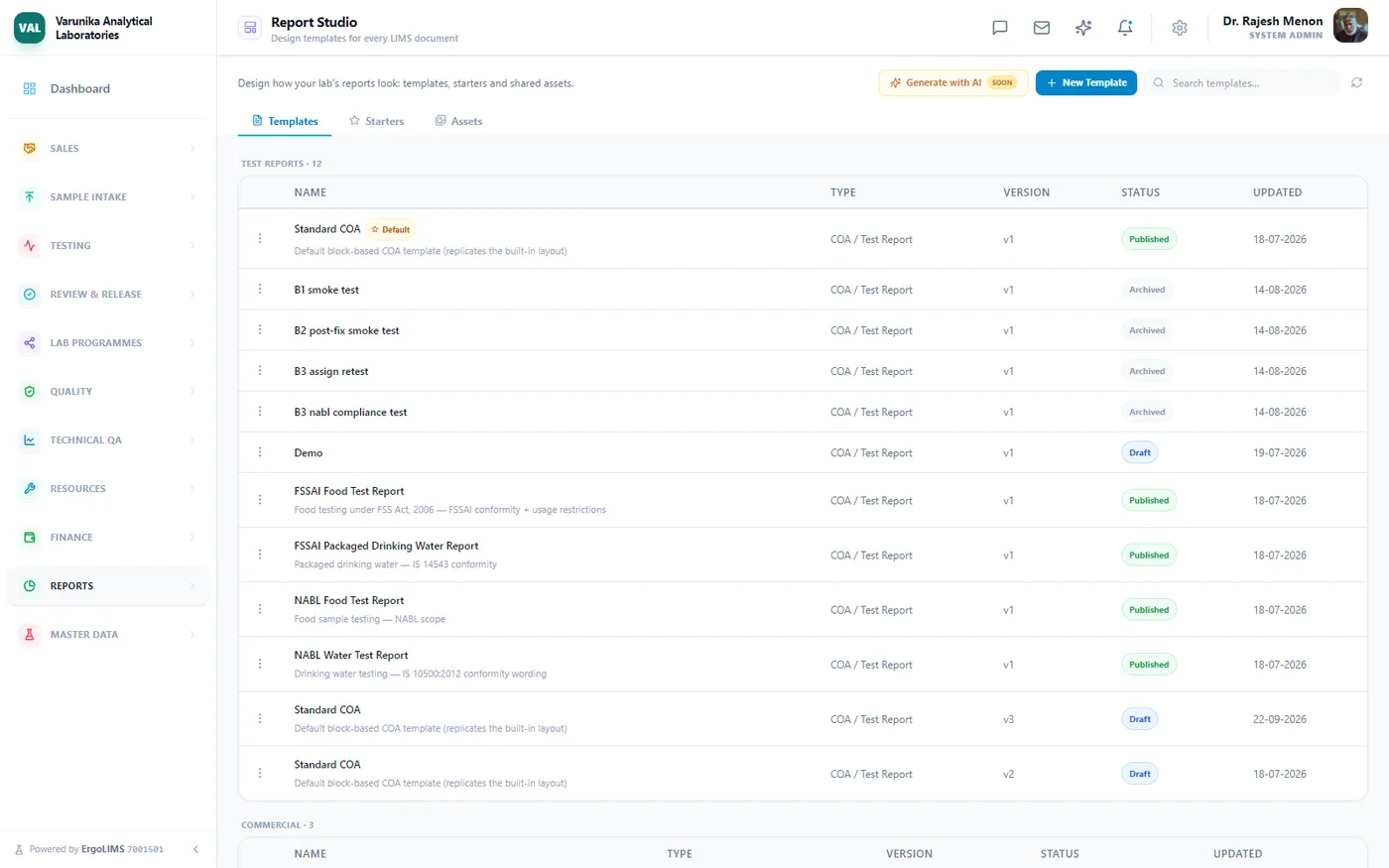
The registration form — three steps, with the customer-committed date and the internal lab target kept as separate fields.
Three people in the lab, three different wins
Enters the reading and gets the calculated result, correctly rounded, without opening a spreadsheet.
Can show an assessor the full chain behind any figure on any certificate, in the room.
Sees which methods are drifting, which instruments are near their calibration date and where turnaround is slipping.
Compliance a chemical assessor will recognise
ISO/IEC 17025:2017
Method validation, uncertainty budgets, QC charts and the management-system records the standard asks for.
NABL
Atomic ULR allocation, accredited-scope handling and authorised signatory registers.
Audit trail
Who, when, old value, new value and reason on every controlled change, enforced by a database trigger.
Traceability
Reference material register with certificates and expiry, and instrument calibration lockout at the point of use.
And you do not start from an empty system
Choose the chemical domain at setup and ErgoLIMS provisions the scaffolding for you — as editable templates, not a locked configuration. The eight seeded limits are IS 1070 reagent-water values for the lab’s own QC — not product acceptance limits. General chemistry limits come from the customer specification, which is configured per product in the specification master.
Questions we hear from chemical labs
See it run on your own parameters
A 30-minute walkthrough with the engineers who built it — using your methods, your limits and your reporting format, not a canned script.