Forty clients, forty specifications, one system that keeps them apart.
Third-party testing is a business of other people’s requirements. ErgoLIMS holds a specification, a price list, a report format and a turnaround promise per customer — and applies the right one without anybody remembering to.
The work is the easy part. Keeping the clients straight is not.
One client accepts a wider tolerance than the next. One wants their own COA layout. One is on a rate contract, one is not, and one is past due and should not be taking new work. None of that is in the LIMS, so it lives in the account manager’s head — and goes on holiday when they do.
Six things a contract testing lab gets that a spreadsheet cannot give it
Each of these is a shipped capability, not a roadmap item.
A specification per customer, versioned and approved
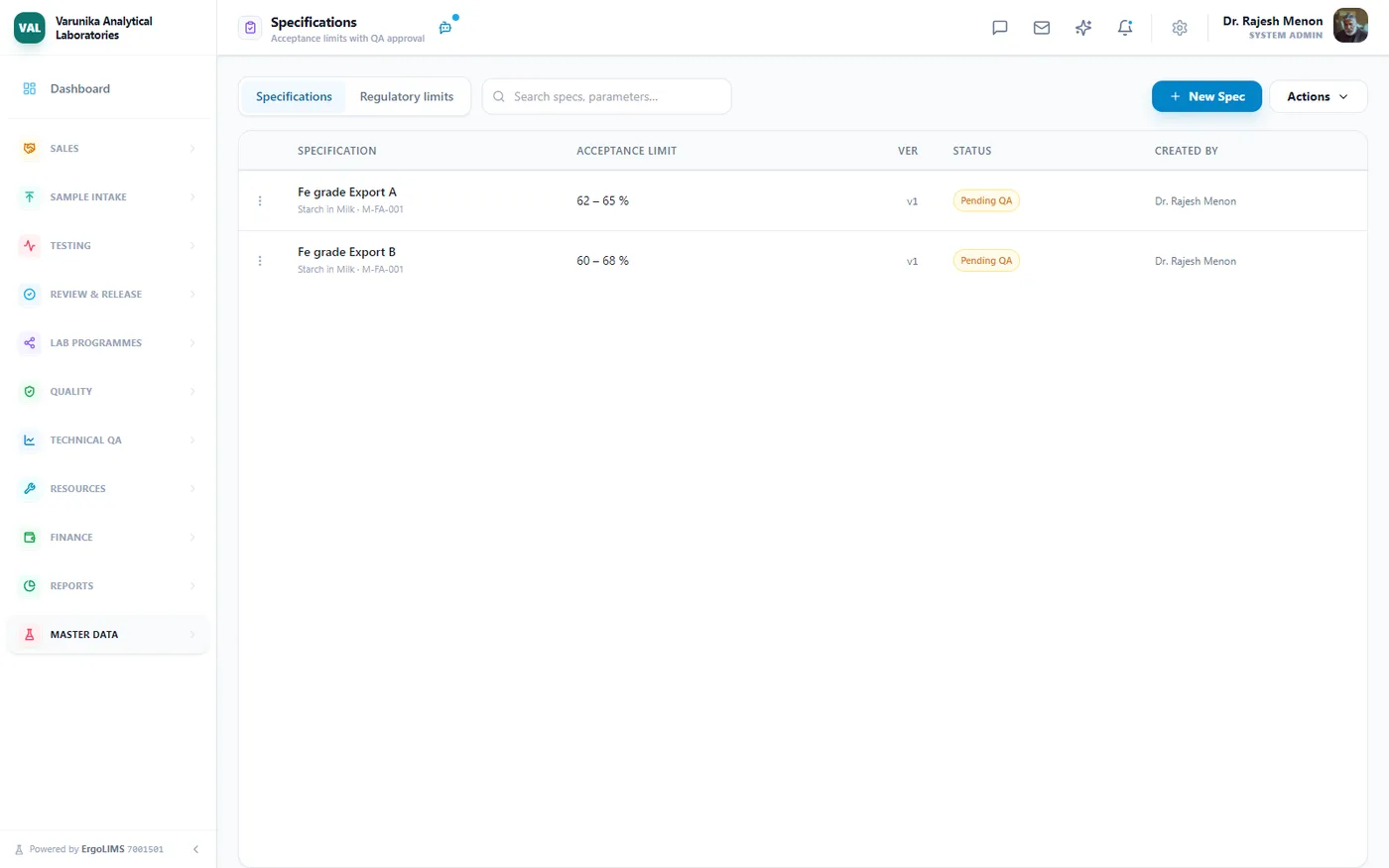
Beyond the method default, specifications carry per-customer and per-product overrides with versioning and an approval step. The same pH result is judged against the contract that client actually signed.
Their report format, under your template control
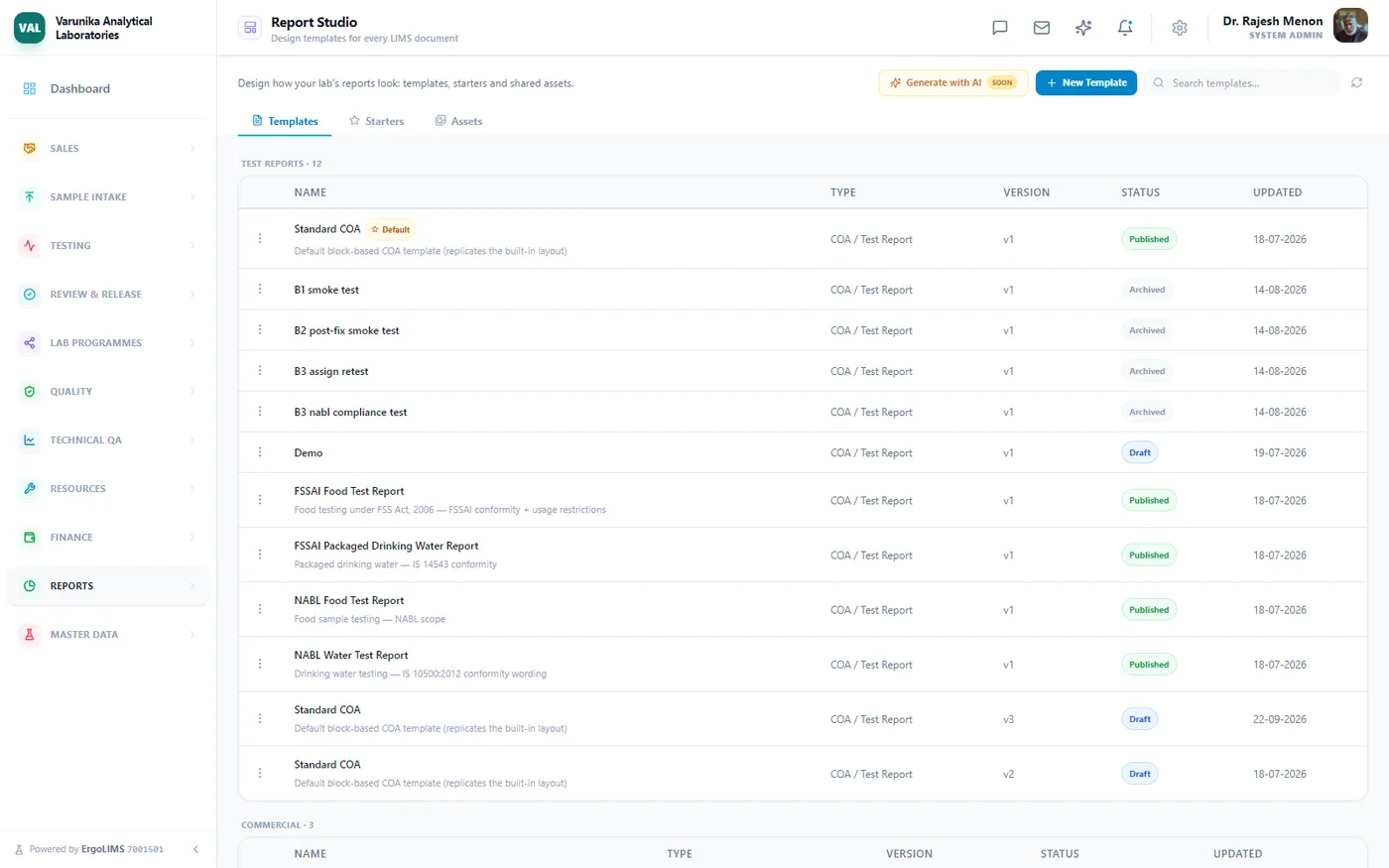
Report Studio holds versioned templates across eight document types, assigned per customer and gated by approval. A client’s format is configured once and issues consistently, whoever is on shift.
Turnaround you can actually promise
SLA agreements per customer, with a breach log and escalation. Due dates count working days against your configured week and lab holidays, and the TAT-risk list shows what is about to slip before it does.
Impartiality you can evidence
Bar a named analyst from a named customer — ISO/IEC 17025 §4.1 — enforced at result entry rather than written in a policy nobody reads. Competency authorisations are per method with expiry dates.
Clients serve themselves
The customer portal gives each account job status, report and invoice download, and the ability to raise new sample requests — under authentication separate from your lab users.
Quotation to invoice on one record
Quotations convert to jobs; price lists and discount masters per customer; consolidated invoicing, GST with HSN and SAC, TDS and TCS, and GSTR-1 export. A blacklist gate stops new work for accounts that should not get it.
How a contract testing sample moves through the system
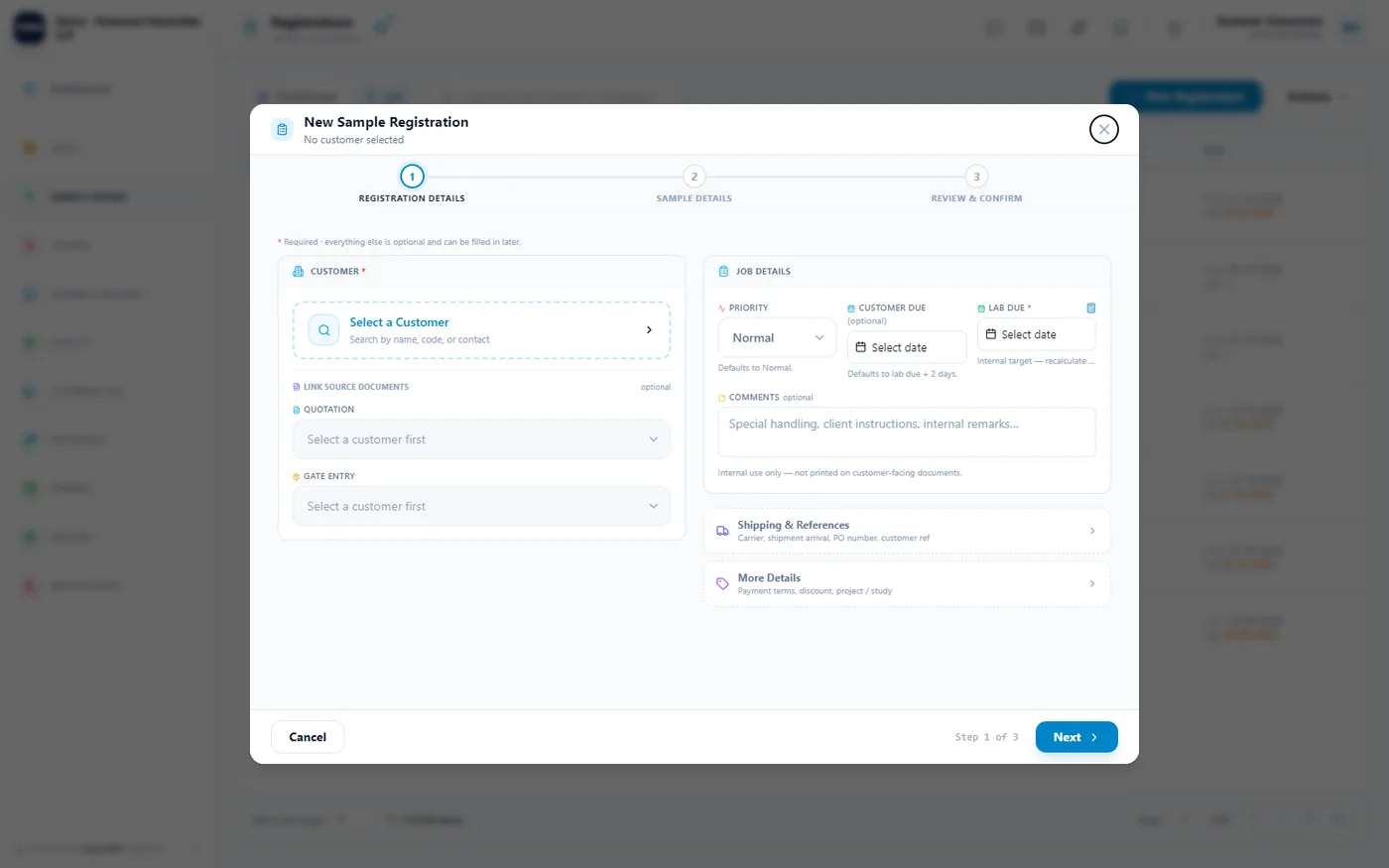
The registration form — three steps, with the customer-committed date and the internal lab target kept as separate fields.
Three people in the lab, three different wins
You can see which clients are profitable, which are overdue, and which are consuming capacity without a matching invoice.
The client’s specification, format and rate are in the system, so cover is possible when you are away.
Impartiality restrictions and per-client criteria are records with approval history, which is what an assessor asks to see.
Compliance a contract testing assessor will recognise
ISO/IEC 17025 §4.1 — impartiality
Analyst-to-customer restrictions enforced at result entry, not left to policy.
ISO/IEC 17025 §7.1 — review of requests
Quotations, feasibility checks and per-customer specifications recorded before work is accepted.
NABL — ULR and signatories
Unique Laboratory Report numbers allocated atomically, with an authorised signatory register.
Confidentiality §4.2
Role-based access with per-user overrides, an append-only audit log, and a portal that shows a client only their own work.
Questions we hear from contract testing labs
See it run on your own parameters
A 30-minute walkthrough with the engineers who built it — using your methods, your limits and your reporting format, not a canned script.