Public money, public scrutiny, and a record that survives both.
State and central laboratories answer to auditors, to RTI, and to the department whose decision rested on your result. ErgoLIMS keeps the evidence in a form that holds up years later, and runs inside your own network if that is the requirement.
The question always comes later, and it is always about a specific sample
A result from three years ago is challenged. Who drew the sample, and when? Which instrument, and was it in calibration that week? Who signed it off, and were they authorised to? If the answer is in a register in a cupboard, the answer effectively does not exist.
Six things a government lab gets that a spreadsheet cannot give it
Each of these is a shipped capability, not a roadmap item.
An audit trail the software itself cannot rewrite
Twelve database triggers block edits and deletes on the activity log, the record audit trail, formula executions, approved formula definitions, domain events and the decision ledger. Each row is sealed with its own SHA-256. The interface has no power to change what happened.
Runs inside your own network
The same product deploys on-premise under an RSA-signed licence, or in AWS Mumbai. No dependency on an external service to keep working, and nothing leaves the building if that is the requirement.
Calibration provable on any given date
Instruments carry calibration schedules, certificates, service and verification logs. Out-of-calibration equipment is locked out of result entry, so a result can never claim an instrument that had lapsed.
Authority recorded, not assumed
Roles plus per-user permission overrides, per-method competency authorisations with expiry, and electronic signatures carrying identity challenge and reason. An author can never approve their own document.
Retention, legal holds and real backups
Versioned retention policies with approval and dry-run, legal holds that override retention, AES-256 encrypted nightly backups to S3 and weekly restore tests that are actually run.
Field sampling that reaches the file
Collection point, GPS coordinates, temperature at collection, chain-of-custody number and field blank ID are structured fields on the sample — searchable and printable, not free text in a remarks column.
How a government sample moves through the system
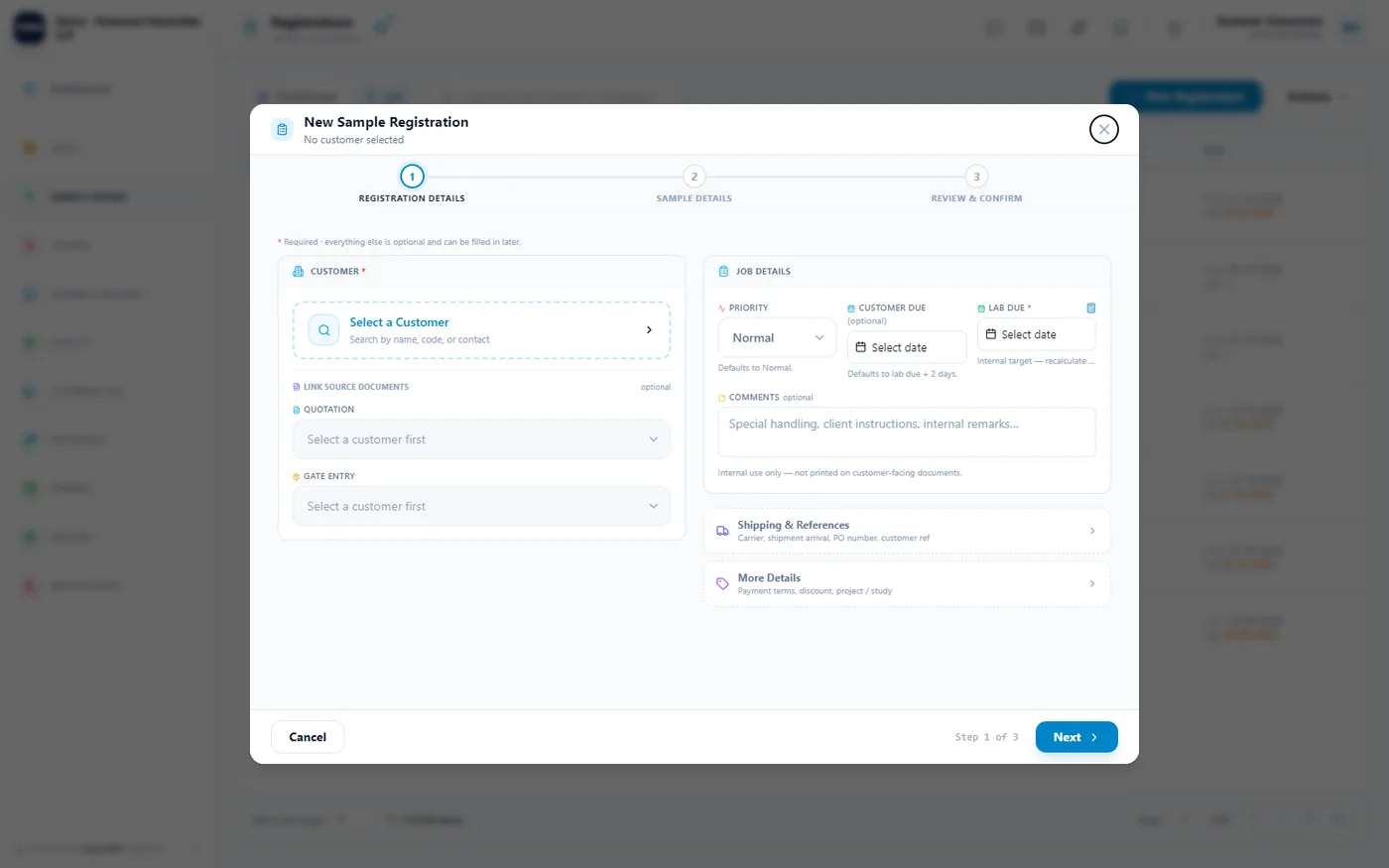
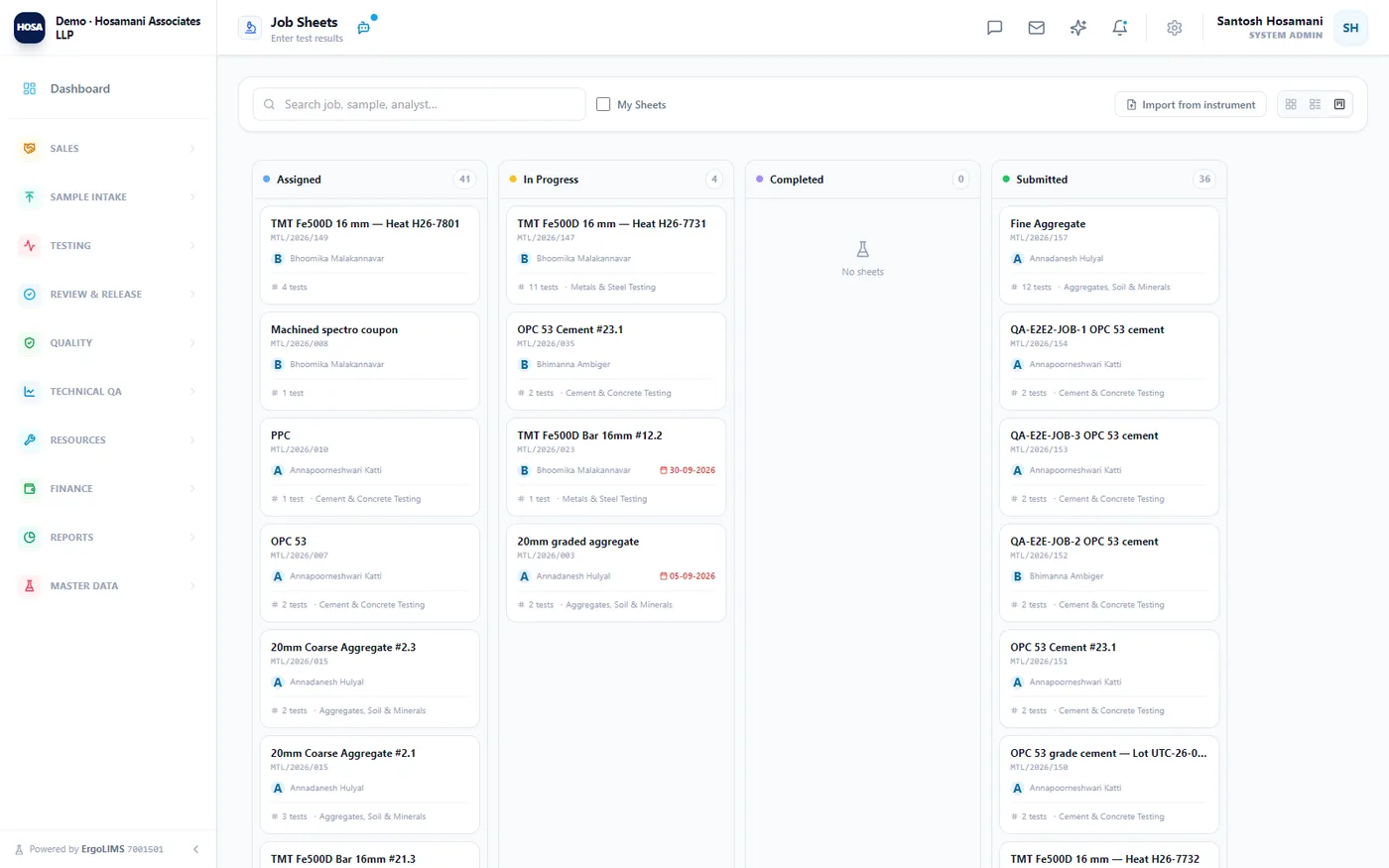
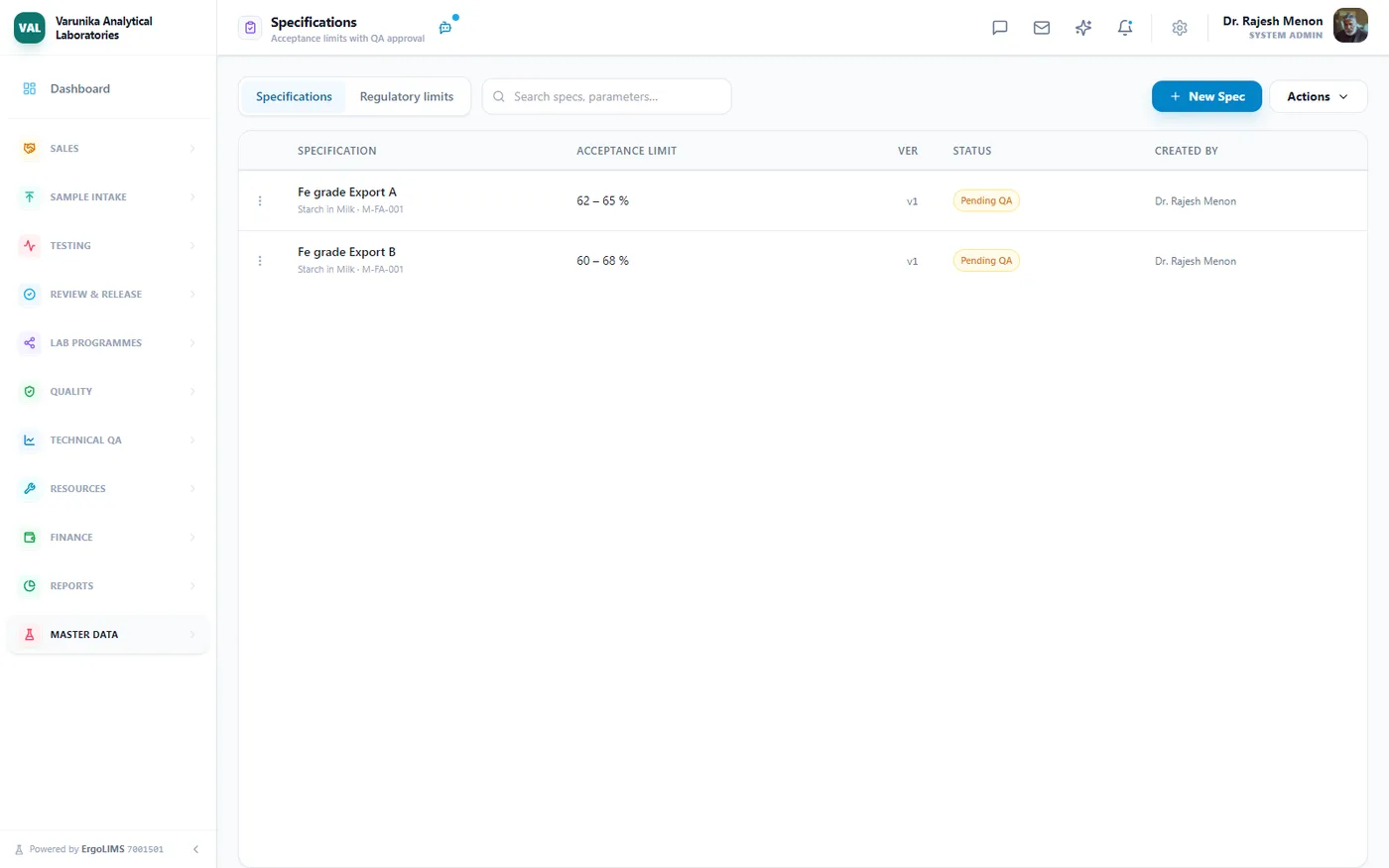
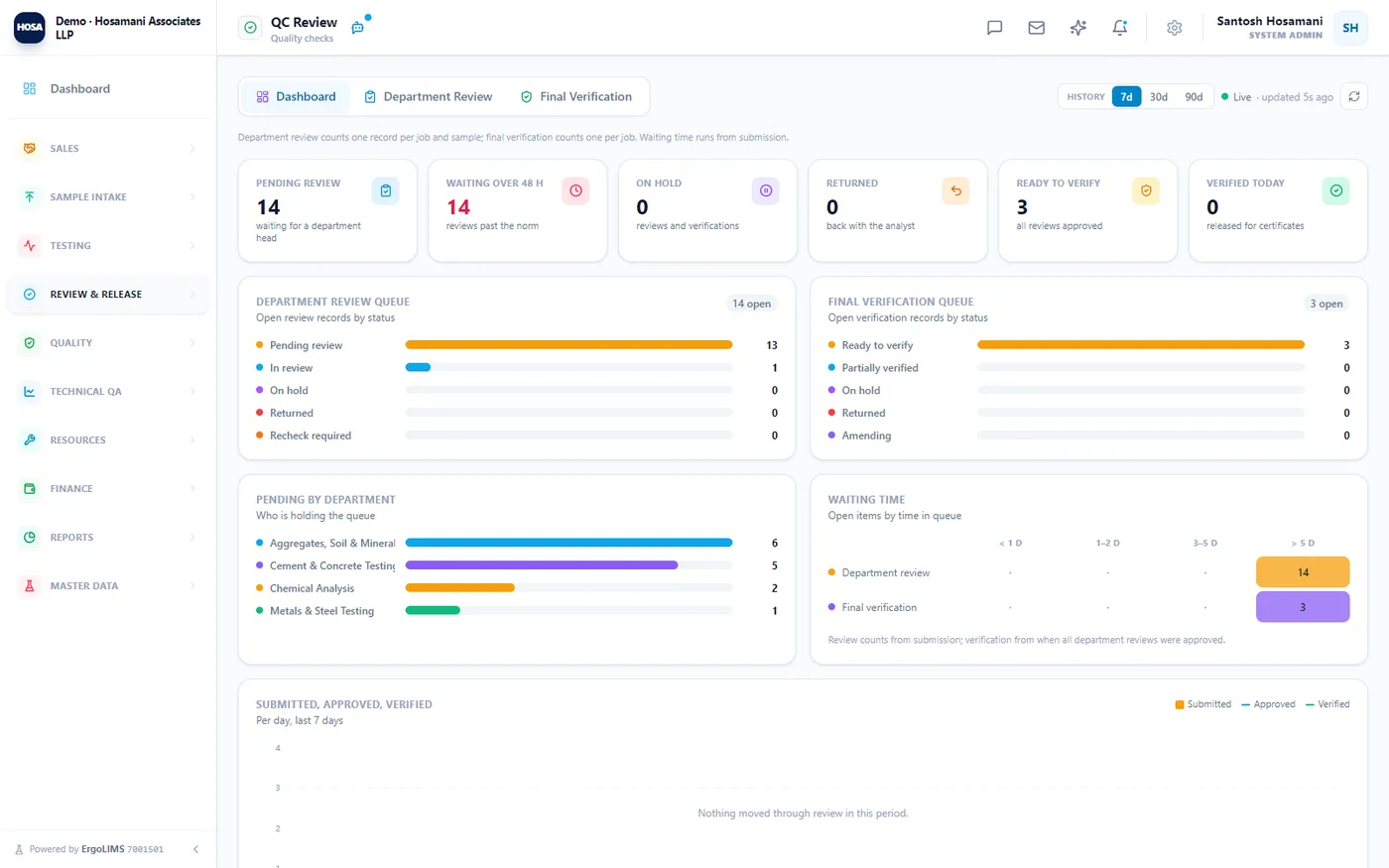
The registration form — three steps, with the customer-committed date and the internal lab target kept as separate fields.
Three people in the lab, three different wins
Every released result traces to an authorised person and a calibrated instrument, on a trail that cannot be edited after the fact.
Internal audits, CAPA, management review and document control sit in the same system as the results they govern.
On-premise Docker deployment under a perpetual licence, with encrypted backups and tested restores — no external dependency to keep the lab running.
Compliance a government assessor will recognise
ISO/IEC 17025:2017
Clause 6 resources, clause 7 process and clause 8 management system, in one product rather than three.
Data residency
AWS Mumbai, or entirely on-premise inside your own network under an RSA-signed licence.
DPDP Act
Data subject requests, consent records, a pseudonymisation log and legal holds, with an append-only access trail.
Records retention
Versioned retention policies with approval and dry-run, dependency guards, and legal holds that override scheduled disposal.
Questions we hear from government labs
See it run on your own parameters
A 30-minute walkthrough with the engineers who built it — using your methods, your limits and your reporting format, not a canned script.